Introduction
The Tailed Tailless Bat (Anoura caudifer), a member of the Phyllostomidae family, is an intriguing species found in the Neotropical regions. Known for its unique morphological features and ecological significance, this bat plays a vital role in pollination and seed dispersal, contributing to the health of its ecosystem. Despite its name suggesting a contradiction, the Tailed Tailless Bat is aptly named due to its subtle tail structure, which offers a fascinating insight into the diversity of bat morphology. This article delves into the various aspects of Anoura caudifer, including its physical description, habitat, behavior, and conservation status, providing a comprehensive overview of this remarkable mammal.
Physical Description
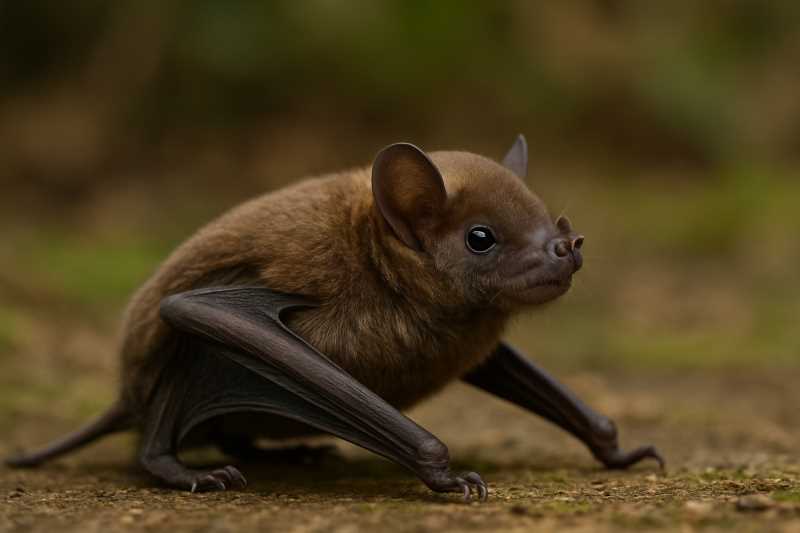
Anoura caudifer is a small to medium-sized bat, with adults typically weighing between 10 to 15 grams. The species has a forearm length of about 35 to 40 millimeters, making it relatively compact in size. Its fur is generally dark brown to black, providing effective camouflage in its natural habitat. One of the distinguishing features of the Tailed Tailless Bat is its reduced tail structure. Unlike many other bat species, Anoura caudifer possesses a very short tail that is almost entirely enclosed within the uropatagium—a membrane that stretches between the hind legs. This gives the bat its "tailless" appearance, despite the presence of a tail.
The bat’s face is characterized by a short, broad muzzle and large eyes, which are adapted for its nocturnal lifestyle. Its ears are moderately sized, rounded, and equipped with a tragus, a small pointed structure that aids in echolocation. The dental formula of Anoura caudifer is 2/2, 1/1, 2/2, 3/3, reflecting its omnivorous diet that includes nectar, insects, and fruit.
Range and Habitat
The Tailed Tailless Bat is predominantly found in Central and South America, with its range extending from southern Mexico through to Brazil and Bolivia. It inhabits a variety of ecosystems, including tropical rainforests, montane forests, and lowland areas. Anoura caudifer is highly adaptable and can be found from sea level up to elevations of 3,000 meters.
The species prefers environments that offer abundant floral resources, as nectar forms a significant part of its diet. Consequently, these bats are often found in areas with a high density of flowering plants. They roost in a variety of sites, including caves, hollow trees, and man-made structures, often forming small colonies that may include other bat species.
Behavior and Diet
Anoura caudifer is primarily nocturnal, emerging at dusk to forage for food. The species is an omnivore with a diet that consists mainly of nectar, pollen, insects, and fruit. Its role as a pollinator is particularly crucial, as it helps in the reproduction of various plant species, including those that are economically significant to humans.
The bat’s foraging behavior is characterized by its hovering ability, similar to that of hummingbirds, which allows it to access nectar from flowers. Its long tongue, equipped with hair-like papillae, facilitates the efficient extraction of nectar. Anoura caudifer also consumes small insects and fruit, supplementing its diet and providing additional nutrients.
Socially, the Tailed Tailless Bat is known for its complex vocalizations, which are used for communication within colonies. These vocalizations, along with echolocation, aid in navigation and foraging in the dark.
Identification Tips (Field Recognition Cues)
Identifying Anoura caudifer in the field requires attention to several key features:
- Tail Structure: Look for the reduced tail that is mostly enclosed within the uropatagium, giving the bat a tailless appearance.
- Size and Coloration: Note the small to medium size and dark brown to black fur.
- Face and Ears: Observe the short, broad muzzle and rounded ears with a prominent tragus.
- Foraging Behavior: Watch for hovering flight patterns near flowers, indicative of nectar-feeding behavior.
- Vocalizations: Listen for the complex calls used for communication, especially when near roost sites.
Conservation Status (with Threats and Protections)
The IUCN currently lists the Tailed Tailless Bat as Least Concern due to its wide distribution and presumed large population. However, like many bat species, Anoura caudifer faces several threats that could impact its conservation status in the future.
Threats:
- Habitat Loss: Deforestation and land conversion for agriculture reduce available roosting and foraging sites.
- Climate Change: Altered precipitation patterns and temperature shifts can affect the availability of floral resources.
- Pollution: Pesticides and other pollutants can negatively impact insect populations, reducing food availability.
Protections:
- Protected Areas: Many regions within the bat’s range are designated protected areas, safeguarding critical habitats.
- Conservation Programs: Initiatives focused on habitat restoration and bat conservation raise awareness and promote sustainable practices.
Frequently Asked Questions
What is the primary diet of the Tailed Tailless Bat?
The Tailed Tailless Bat primarily feeds on nectar, making it an important pollinator in its ecosystem. Its diet also includes insects and fruit, providing a balanced nutritional intake.
How does Anoura caudifer contribute to its ecosystem?
Anoura caudifer plays a crucial role in pollination and seed dispersal, facilitating the reproduction of various plant species and maintaining ecological balance in its habitat.
Where can the Tailed Tailless Bat be found?
This species is found in Central and South America, ranging from southern Mexico to parts of Brazil and Bolivia, inhabiting diverse ecosystems such as tropical rainforests and montane forests.
What are the main threats to Anoura caudifer?
The primary threats include habitat loss due to deforestation, climate change affecting floral resources, and pollution impacting food availability.
How can we help conserve the Tailed Tailless Bat?
Conservation efforts can include supporting habitat protection initiatives, reducing pesticide use, and participating in bat conservation awareness programs.
Related posts