The Himalayan Black-lored Tit: A Jewel of the Mountains
The Himalayan Black-lored Tit (Machlolophus xanthogenys) is a small passerine bird that commands attention with its vibrant plumage and lively demeanor. As a member of the tit family, Paridae, this species thrives in the rich biodiversity of the Himalayan region. Known for their adaptability, these birds represent the intricate balance of life in one of the most ecologically diverse regions in the world.
Taxonomy and Classification
The Himalayan Black-lored Tit belongs to the genus Machlolophus, which is part of the larger family of Paridae, commonly referred to as tits or chickadees. Its scientific name, Machlolophus xanthogenys, is derived from Greek and Latin roots, with ‘xanthogenys’ referencing its distinctive yellow cheeks. The species was previously grouped under the genus Parus, but recent taxonomic revisions have placed it in the genus Machlolophus, highlighting its unique evolutionary lineage.
Physical Description
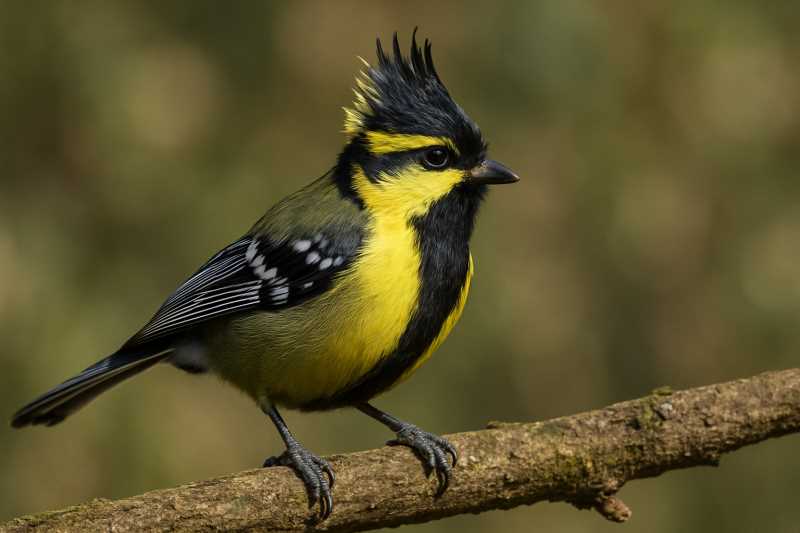
This small bird is a visual delight, measuring approximately 13–14 cm in length. The Himalayan Black-lored Tit boasts a striking appearance with its bright yellow underparts contrasted by a black head adorned with a prominent crest. The ‘lore,’ or area between the eye and the bill, features distinctive black markings that give the bird its name. The wings and tail are a mix of greenish-yellow and black, further enhancing its vibrant look. Such vivid coloration not only plays a role in mating displays but also aids in territorial defense.
Habitat and Distribution
The Himalayan Black-lored Tit inhabits the lush forests and wooded areas of the Himalayan foothills, extending its range across northern India, Nepal, Bhutan, and parts of Pakistan. It prefers altitudes ranging from 1,500 to 3,500 meters, thriving in temperate and subtropical forests characterized by dense canopies and abundant underbrush. These environments provide ample food sources and nesting sites, crucial for the survival of this species.
Behavior and Diet
As an agile and acrobatic bird, the Himalayan Black-lored Tit is known for its lively foraging behavior. It primarily feeds on insects, spiders, and various arthropods, playing a vital role in pest control within its ecosystem. Additionally, it supplements its diet with seeds and berries, showcasing its opportunistic feeding habits. This adaptability in diet is a testament to its resilience in the face of changing environmental conditions.
The species is also known for its social nature, often forming small flocks outside the breeding season. These flocks may include other tit species, emphasizing the bird’s cooperative behavior and community reliance. Its vocalizations, a series of cheerful and melodious calls, are used for communication within the flock and to establish territory.
Breeding and Reproduction
The breeding season for the Himalayan Black-lored Tit typically spans from April to June. During this period, males engage in elaborate courtship displays, flaunting their vibrant plumage and performing aerial acrobatics to attract potential mates. Nesting usually occurs in tree cavities or old woodpecker holes, which the birds line with moss, feathers, and other soft materials to create a comfortable environment for their eggs.
A typical clutch consists of 4-6 eggs, which are incubated primarily by the female for about two weeks. Once hatched, both parents participate in feeding the chicks, ensuring a balanced diet of insects and other protein-rich food. The fledglings leave the nest after approximately three weeks, continuing to rely on their parents for nourishment and guidance as they learn to forage independently.
Conservation Status and Threats
Currently, the Himalayan Black-lored Tit is listed as a species of ‘Least Concern’ by the International Union for Conservation of Nature (IUCN). However, like many species in the Himalayan region, it faces threats from habitat loss due to deforestation, agricultural expansion, and climate change. Conservation efforts aimed at preserving the rich biodiversity of the Himalayas are crucial to ensuring the survival of this species and its habitat.
Conclusion
The Himalayan Black-lored Tit is more than just a strikingly beautiful bird; it is an integral part of the Himalayan ecosystem. Its presence is indicative of the health of its environment, and its adaptability showcases the resilience of nature. As we continue to explore and understand the complexities of the natural world, the Himalayan Black-lored Tit serves as a reminder of the vibrant life that thrives in even the most remote corners of our planet.
By fostering conservation efforts and promoting awareness, we can ensure that this jewel of the mountains, along with countless other species, continues to grace our world with its presence.
References
– Grimmett, R., Inskipp, C., & Inskipp, T. (2011). **Birds of the Indian Subcontinent**. Oxford University Press.
– Rasmussen, P. C., & Anderton, J. C. (2012). **Birds of South Asia: The Ripley Guide**. Smithsonian Institution and Lynx Edicions.
– BirdLife International (2021). Species factsheet: Machlolophus xanthogenys. Downloaded from http://www.birdlife.org on [Date].
Related posts