Clark’s Grebe: A Comprehensive Study of the Western Avian Specialist
Clark’s Grebe (Aechmophorus clarkii) is a captivating waterbird species primarily found in the western regions of North America. Known for its striking black-and-white plumage and elaborate courtship displays, this bird has intrigued ornithologists and bird enthusiasts alike. This article delves into the biology, behavior, habitat, and conservation efforts surrounding Clark’s Grebe, providing a detailed overview of this fascinating species.
Taxonomy and Identification
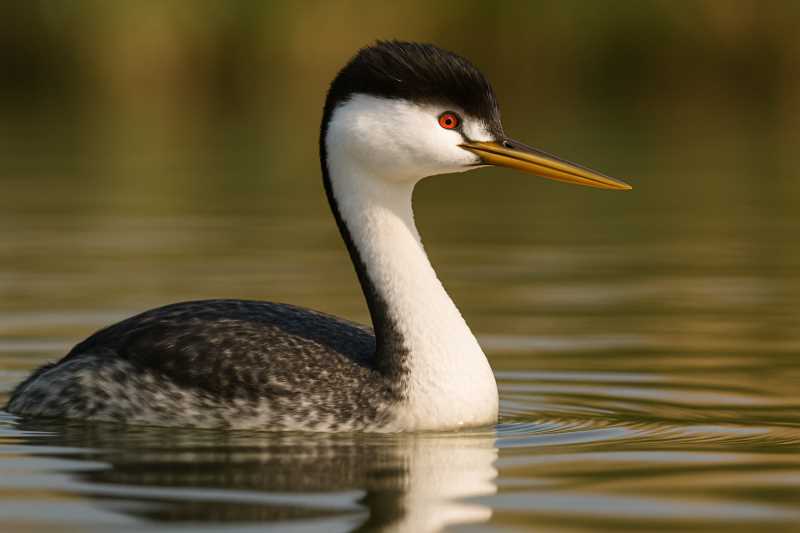
Clark’s Grebe belongs to the Podicipedidae family, which comprises the grebes, a group of diving water birds. It was initially considered a morph of the closely related Western Grebe (Aechmophorus occidentalis) until it was recognized as a distinct species in 1985. The distinguishing features of Clark’s Grebe include its brighter white cheeks and flanks, a slightly upturned bill, and a lighter coloration on its back compared to the Western Grebe.
The adult Clark’s Grebe typically measures between 22 to 29 inches in length, with a wingspan of approximately 24 to 29 inches. Their long necks and slender bodies are perfectly adapted for a life spent mostly on water. The species exhibits sexual dimorphism, with males generally being larger than females.
Habitat and Distribution
Clark’s Grebe predominantly inhabits freshwater lakes, marshes, and estuaries in the western United States and Mexico. During the breeding season, which spans from April to September, they are commonly found in large, open bodies of water with an abundance of aquatic vegetation. This preference allows them to build floating nests anchored to submerged plants.
In winter, Clark’s Grebes migrate to coastal regions, including the Pacific Coast, where they can find abundant food sources and milder climates. Their migration patterns are influenced by the availability of open water and food resources.
Diet and Feeding Behavior
As piscivores, Clark’s Grebes primarily feed on small fish, which they catch by diving underwater. They are skilled divers, capable of reaching depths of up to 20 feet and staying submerged for extended periods. In addition to fish, their diet may include crustaceans, insects, and small amphibians, depending on the availability of prey in their habitat.
Clark’s Grebes employ a unique hunting technique, using their long necks to spear fish with precision. Their sharp, pointed bills are adapted to seize slippery prey, making them efficient hunters in their aquatic environments.
Breeding and Courtship
One of the most remarkable aspects of Clark’s Grebe’s life cycle is its elaborate courtship rituals. These displays are not only a spectacle for observers but also play a crucial role in pair bonding and mate selection.
The courtship dance of Clark’s Grebe includes synchronized swimming and the iconic “rushing” display, where pairs run across the water’s surface side by side. These rituals are accompanied by a series of vocalizations and head movements that reinforce pair bonds and demonstrate fitness to potential mates.
Once a pair is formed, they collaborate in building a floating nest, which is typically anchored to emergent vegetation. Both parents share responsibilities in incubating the eggs and feeding the chicks, which are precocial and capable of swimming shortly after hatching.
Conservation Status and Threats
Currently, Clark’s Grebe is classified as a species of Least Concern by the International Union for Conservation of Nature (IUCN). However, like many bird species, it faces threats from habitat loss, pollution, and climate change.
The draining of wetlands for agricultural and urban development poses a significant threat to the breeding habitat of Clark’s Grebe. Additionally, water pollution from agricultural runoff and oil spills can degrade their habitat and food sources.
Climate change is another growing concern, as it can alter the availability of suitable breeding and wintering habitats. Changes in precipitation patterns and water levels may also impact the species’ ability to find food and successfully raise their young.
Conservation Efforts
Conservation organizations and government agencies are actively working to protect and preserve the habitats of Clark’s Grebe. Efforts include wetland restoration projects, pollution control measures, and public awareness campaigns aimed at reducing human impact on these critical ecosystems.
Birdwatching groups and citizen scientists play a vital role in monitoring Clark’s Grebe populations, providing valuable data on population trends and distribution. This information is crucial for informed conservation planning and policy-making.
Conclusion
Clark’s Grebe is a remarkable species that exemplifies the beauty and complexity of avian life. Its striking appearance and captivating behaviors make it a favorite among bird enthusiasts, while its ecological role highlights the interconnectedness of aquatic ecosystems.
As we continue to face environmental challenges, the conservation of Clark’s Grebe and its habitat remains a testament to our commitment to preserving biodiversity. By understanding and protecting this species, we ensure that future generations can enjoy the marvel of Clark’s Grebe and the rich tapestry of life it represents.
Related posts