Omura’s Whale (Balaenoptera omurai): A Comprehensive Guide
Introduction
Omura’s whale (Balaenoptera omurai), a relatively recent discovery in the world of cetaceans, is a fascinating species that has intrigued marine biologists and whale enthusiasts alike. First described as a distinct species in 2003, this elusive whale has a lot to offer in terms of understanding marine biodiversity and the intricacies of marine ecosystems. Often confused with the Bryde’s whale due to their morphological similarities, Omura’s whale has unique characteristics and behaviors that set it apart.
The discovery of Omura’s whale has expanded our understanding of the diversity within the Balaenopteridae family, which includes other well-known giants like the blue whale and the humpback whale. Despite being a lesser-known species, Omura’s whale plays a significant role in maintaining the health of marine ecosystems.
Physical Description
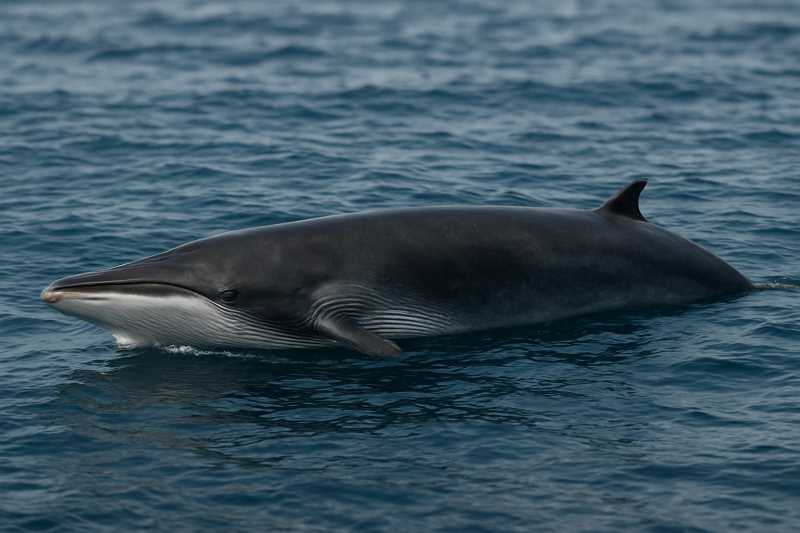
Omura’s whale is a relatively small baleen whale, reaching lengths of about 10 to 11.5 meters (33 to 38 feet). One of the defining features of this species is its asymmetrical coloration. The left side of the lower jaw is dark, while the right side is predominantly white, a characteristic that is more pronounced than in any other baleen whale species.
The body shape of Omura’s whale is slender and streamlined, optimized for swift movement through the ocean. They possess a long, narrow rostrum and a series of 80 to 90 throat pleats, which allow their mouths to expand when feeding. Omura’s whales have a small, falcate dorsal fin located two-thirds of the way down their back, distinguishing them from other similar-sized whales.
Their baleen plates are relatively short and pale in color, which they use to filter small fish and plankton from the water. This species’ blow is typically low and inconspicuous, making them harder to spot in the wild compared to larger baleen whales.
Range and Habitat
Omura’s whales have a distribution that is closely associated with tropical and subtropical waters. Sightings have predominantly occurred in the Indian and Pacific Oceans. They prefer warm, coastal waters and are often seen in areas with a depth of less than 200 meters.
Regions where Omura’s whales have been reliably observed include the waters off Madagascar, Thailand, and Japan. These areas provide the warm temperatures and abundant food supply that Omura’s whales require. While they inhabit coastal regions, their presence in deeper waters is not entirely ruled out; however, such sightings are less common.
This species is not migratory in the traditional sense observed in other whale species. Instead, they are believed to have a more localized movement pattern, influenced by the availability of prey rather than seasonal temperature changes.
Behavior and Diet
Omura’s whales are generally solitary creatures, although they are occasionally observed in small groups, likely consisting of a mother and calf or temporary feeding aggregations. Their behavior is typically inconspicuous, spending much of their time submerged and displaying minimal surface activity.
Their diet primarily consists of small schooling fish and krill. They employ lunge feeding techniques similar to other rorquals, where they rapidly accelerate towards a prey ball, engulfing it along with significant volumes of water. The throat pleats then expand, allowing the whale to filter out the water and retain the prey using their baleen plates.
Vocalizations are an essential aspect of Omura’s whale communication. They produce low-frequency sounds that are used for navigation, foraging, and social interactions, although the specific functions of these vocalizations remain an area of ongoing research.
Identification Tips (Field Recognition Cues)
Identifying Omura’s whale in the field can be challenging due to its resemblance to Bryde’s whale and other similar species. However, there are several cues that can aid in accurate identification:
- Coloration: The asymmetrical jaw coloration, with the right side being significantly lighter than the left, is a key identifier.
- Size and Shape: Omura’s whales are smaller and more slender than Bryde’s whales, with a more pronounced falcate dorsal fin.
- Dorsal Fin: The dorsal fin is small and pointed, located further back on the body compared to similar species.
- Blow Characteristics: Their blow is typically low and inconspicuous, often less than two meters high, which can be a distinguishing factor.
- Behavior: Observing their feeding behavior and surfacing patterns can provide additional clues, as they are generally more solitary.
Conservation Status (with Threats and Protections)
Omura’s whale is classified as "Data Deficient" by the International Union for Conservation of Nature (IUCN), primarily due to the lack of comprehensive data on its population size and trends. This classification highlights the need for further research to ensure the species’ protection and conservation.
Threats
- Habitat Degradation: Coastal development and pollution pose significant threats to their habitat, affecting the availability of prey and the overall health of the marine environment.
- Bycatch: Accidental capture in fishing gear is a considerable threat, as whales entangled in nets can suffer injuries or drown.
- Climate Change: Changes in sea temperature and food availability due to climate change can impact their survival and distribution.
Protections
Efforts to protect Omura’s whale include:
- Marine Protected Areas (MPAs): Establishing and enforcing MPAs in known habitats can help safeguard their environment.
- International Regulations: Compliance with international agreements like the Convention on International Trade in Endangered Species (CITES) can help control the impact of human activities.
- Research Initiatives: Supporting scientific research to gather data on their population and ecology aids in effective conservation planning.
Frequently Asked Questions
What is the difference between Omura’s whale and Bryde’s whale?
Omura’s whale is smaller and has a distinct asymmetrical jaw coloration compared to Bryde’s whale. Additionally, Omura’s has a more slender body and a smaller, more pointed dorsal fin.
Where can Omura’s whales be found?
Omura’s whales are typically found in the warm, coastal waters of the Indian and Pacific Oceans, including areas off Madagascar, Thailand, and Japan.
How does Omura’s whale communicate?
Omura’s whales communicate using low-frequency vocalizations, which are utilized for navigation, foraging, and social interactions.
What do Omura’s whales eat?
Their diet consists of small schooling fish and krill, which they capture using lunge feeding techniques.
What are the main threats to Omura’s whale conservation?
The primary threats include habitat degradation, bycatch in fishing gear, and the impacts of climate change on their food supply and habitat.
Related posts