Introduction
Johnstone’s Giant Mastiff Bat, scientifically known as Otomops johnstonei, is a fascinating species of bat that commands attention due to its unique physical features and ecological significance. As a member of the family Molossidae, this species is part of a group commonly referred to as free-tailed bats, named for the distinctive extension of their tail beyond the uropatagium. The species was first described in the late 20th century and has since intrigued both researchers and bat enthusiasts alike. This article delves into various aspects of Johnstone’s Giant Mastiff Bat, from its physical characteristics to its behavior and conservation status.
Physical Description
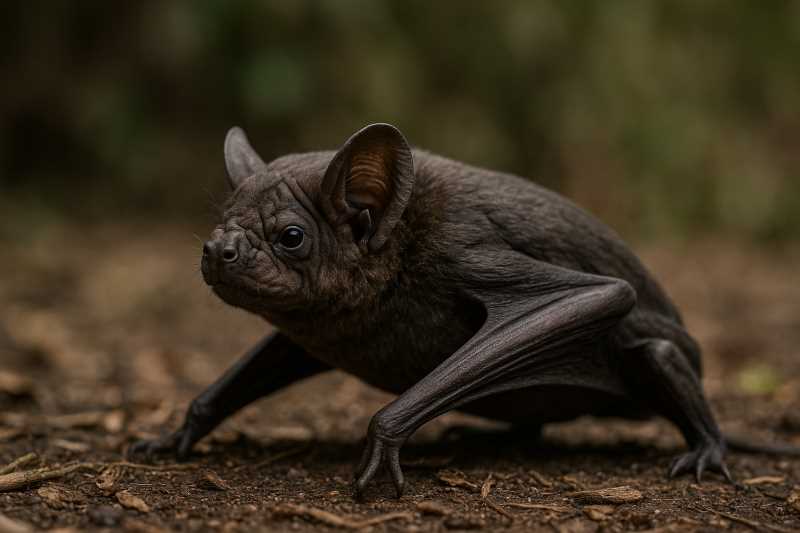
Johnstone’s Giant Mastiff Bat is renowned for its large size relative to other species within its genus. It exhibits a robust body with a wingspan that can reach up to 45 centimeters, making it one of the larger members of the Molossidae family. The fur is typically a dark brown hue, which provides excellent camouflage in its natural habitat. The bat’s face is characterized by a wrinkled appearance, a broad muzzle, and large, forward-facing ears that aid in its echolocation abilities. The tail, extending beyond the membrane, is a notable feature, giving this species its common name.
The dental structure of Otomops johnstonei is adapted for its diet, with sharp teeth capable of piercing through the exoskeletons of insects. This anatomical feature, combined with its powerful jaw muscles, facilitates its role as a nocturnal predator.
Range and Habitat
Johnstone’s Giant Mastiff Bat is primarily found in parts of Africa, with the most significant populations residing in forested and savannah regions. Their range extends through countries such as Kenya, Tanzania, and parts of Uganda. These bats favor habitats that offer ample roosting sites, such as caves, hollow trees, and abandoned buildings, where they can remain undisturbed during the day.
Climate plays a crucial role in determining the distribution of Otomops johnstonei. They thrive in areas that provide a warm climate, which is essential for their metabolic processes. As nocturnal creatures, they emerge after sunset to exploit the abundance of nocturnal insects, which form the bulk of their diet.
Behavior and Diet
Otomops johnstonei is a nocturnal species, with activity peaking shortly after dusk. Their flight is swift and agile, allowing them to cover large areas in search of prey. Echolocation is central to their hunting strategy, enabling them to detect and capture insects with precision. Their diet predominantly consists of moths, beetles, and other flying insects, which they catch in mid-air using their tails and wings as nets.
Social structures in Johnstone’s Giant Mastiff Bat populations are typically loose, with individuals often roosting in small groups. Communication among these bats relies heavily on vocalizations and pheromones, which play a role in mating and establishing territory.
Identification Tips
Recognizing Johnstone’s Giant Mastiff Bat in the wild requires attention to several key characteristics:
- Size and Shape: Look for a large bat with a wingspan of approximately 45 centimeters and a streamlined body.
- Tail Features: Note the distinctive tail extending beyond the uropatagium, a hallmark of the species.
- Ear Structure: Large, forward-facing ears are prominent and aid in echolocation.
- Flight Pattern: Observe its fast, straight flight, typical of mastiff bats.
- Vocalizations: Listen for high-pitched echolocation calls, which can sometimes be heard by human ears.
Conservation Status
Johnstone’s Giant Mastiff Bat is currently classified as Near Threatened on the IUCN Red List. The primary threats to their survival include habitat loss due to deforestation and human encroachment, as well as disturbances to their roosting sites. Additionally, pesticide use in agriculture poses a significant risk by reducing insect populations, which are crucial to their diet.
Conservation efforts are underway to protect their habitats and raise awareness about the ecological importance of bats. Legal protections in some countries aim to conserve critical habitats, and educational programs are being developed to reduce human-wildlife conflict.
Frequently Asked Questions
1. What do Johnstone’s Giant Mastiff Bats eat? Johnstone’s Giant Mastiff Bats primarily feed on flying insects such as moths and beetles, which they skillfully capture using echolocation.
2. Where can Johnstone’s Giant Mastiff Bats be found? These bats are found in parts of Africa, particularly in forested and savannah regions of Kenya, Tanzania, and Uganda.
3. How do Johnstone’s Giant Mastiff Bats use echolocation? They emit high-frequency sound waves that bounce off objects, helping them navigate and locate prey in the dark.
4. Are Johnstone’s Giant Mastiff Bats endangered? Currently, they are listed as Near Threatened, facing risks from habitat destruction and pesticide use.
5. How can I identify a Johnstone’s Giant Mastiff Bat? Look for a large bat with a prominent tail, large ears, and a swift, agile flight pattern, often active after dusk.
Related posts