Introduction
The Khingan Zokor, scientifically known as Myospalax epsilanus, is a fascinating burrowing rodent native to East Asia. This species is part of the Spalacidae family, which comprises various subterranean mammals primarily found in Asia. Zokors are often mistaken for moles due to their similar burrowing lifestyle, but they belong to a completely different family. The Khingan Zokor is particularly notable for its specialized adaptations to a life spent mostly underground. This article aims to delve into the intricacies of the Khingan Zokor’s physical attributes, habitat, behavior, and conservation status, providing comprehensive insights into this lesser-known species.
Physical Description
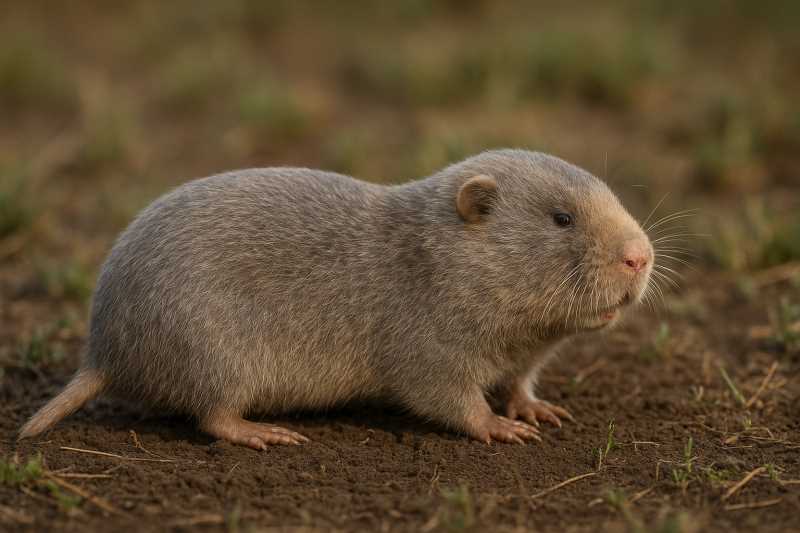
The Khingan Zokor is a medium-sized rodent characterized by its robust body and short limbs, which are well-adapted for digging. Adults typically weigh between 150 to 300 grams and measure about 15 to 20 centimeters in length. The fur is dense and soft, usually a grayish-brown color, providing excellent camouflage against the soil. Unlike other rodents, the Zokor’s eyes are small and not well-developed, a common trait among subterranean animals. Their ears are also reduced in size, further emphasizing their adaptation to life below ground. The forelimbs are strong and equipped with long claws, perfect for digging extensive tunnel systems.
One of the defining features of the Khingan Zokor is its powerful incisors that extend beyond the lips, allowing it to dig through soil efficiently without ingesting dirt. These incisors are continually growing, necessitating constant gnawing to keep them at a functional length. Their body structure is cylindrical, aiding in smooth movement through their underground burrows.
Range and Habitat
The Khingan Zokor is primarily found in the northeastern regions of China, particularly in Heilongjiang and Inner Mongolia, as well as parts of the Russian Far East. Their habitat consists of temperate forests, grasslands, and shrublands, where they can dig through the soft, loamy soils. Zokors prefer areas with rich, loose soil that facilitates easier excavation of their complex tunnel systems.
These rodents are known to construct elaborate burrow networks that can extend several meters underground. The burrows serve various functions, including nesting, food storage, and protection from predators. Each burrow system typically includes a main tunnel, multiple side branches, and a nesting chamber. The Khingan Zokor’s habitat is often characterized by visible mounds of earth on the surface, which are the result of their digging activity.
Behavior and Diet
Khingan Zokors are solitary animals, spending most of their lives underground. They are known for their industrious nature, constantly expanding and maintaining their burrow systems. Their activity is largely crepuscular, with peak activity occurring during dawn and dusk.
The diet of the Khingan Zokor consists mainly of underground plant parts, such as roots, tubers, and bulbs. They have a particular preference for wild grasses and herbaceous plants. Zokors are also known to consume cultivated crops, which can sometimes bring them into conflict with agricultural activities.
Despite their solitary nature, Khingan Zokors communicate through a series of vocalizations and by drumming their feet on the tunnel walls. This behavior serves multiple purposes, including territory establishment and mate attraction.
Identification Tips (Field Recognition Cues)
Identifying the Khingan Zokor in the field requires keen observation of their unique characteristics and habitat signs:
- Burrow Mounds: Look for fresh mounds of soil with characteristic crescent shapes, indicating recent digging activity.
- Fur and Body Structure: If observed directly, note the soft, dense fur and cylindrical body shape, which are adapted for underground life.
- Behavioral Signs: Listen for distinct vocalizations or drumming sounds emanating from below the surface, especially during dawn and dusk.
- Location: Focus on regions within their known range, primarily northeastern China and parts of the Russian Far East.
- Feeding Sites: Check for signs of plant disturbance where roots and tubers have been consumed.
Conservation Status (with Threats and Protections)
Currently, the Khingan Zokor is listed as Least Concern by the International Union for Conservation of Nature (IUCN), due to its relatively stable population across its range. However, several threats could potentially impact this status in the future.
Threats
- Habitat Destruction: Agricultural expansion and deforestation pose significant threats to their natural habitat, reducing the availability of suitable burrowing grounds.
- Pesticides and Rodenticides: The use of chemicals in agriculture can lead to poisoning and reduced food availability for the Zokors.
- Climate Change: Alterations in climate patterns can affect soil conditions and the availability of food resources.
Protections
Efforts to conserve the Khingan Zokor include habitat protection through the establishment of nature reserves and protected areas. Additionally, research initiatives aimed at understanding their ecology and behavior are crucial for developing effective conservation strategies.
Frequently Asked Questions
1. What is the primary diet of the Khingan Zokor?
The Khingan Zokor primarily feeds on underground plant parts, such as roots, tubers, and bulbs. They have a preference for wild grasses and herbaceous plants, but they may also consume cultivated crops, which can lead to conflicts with agriculture.
2. How do Khingan Zokors adapt to their underground lifestyle?
Khingan Zokors exhibit several adaptations for subterranean living, including reduced size of eyes and ears, cylindrical body shape, strong forelimbs with long claws for digging, and powerful incisors that extend beyond the lips to aid in soil excavation.
3. Where can Khingan Zokors be found in the wild?
They are primarily located in northeastern China, particularly in Heilongjiang and Inner Mongolia, as well as parts of the Russian Far East. Their habitats include temperate forests, grasslands, and shrublands with loose, loamy soils.
4. Are Khingan Zokors endangered?
Currently, Khingan Zokors are classified as Least Concern by the IUCN due to their stable population. However, threats such as habitat destruction and pesticide use could potentially impact their status in the future.
5. How do Khingan Zokors communicate?
Khingan Zokors communicate through vocalizations and by drumming their feet on the tunnel walls. This behavior is used for territory establishment and attracting mates.
Related posts