Introduction
The Spiny Moss Mouse, scientifically known as Tarsomys echinatus, is a lesser-known rodent species that piques the interest of mammalogists and conservationists alike. This small mammal, native to the Philippines, plays a vital role in its ecosystem. Despite its diminutive size, the Spiny Moss Mouse exhibits fascinating adaptations that make it a subject of scientific curiosity and ecological importance.
Understanding the Spiny Moss Mouse is essential not only for its preservation but also for maintaining the biodiversity of its habitat. This article delves into the various aspects of the Spiny Moss Mouse, including its physical characteristics, habitat preferences, behavioral patterns, and current conservation status, providing a comprehensive overview that will enrich our appreciation and understanding of this unique species.
Physical Description
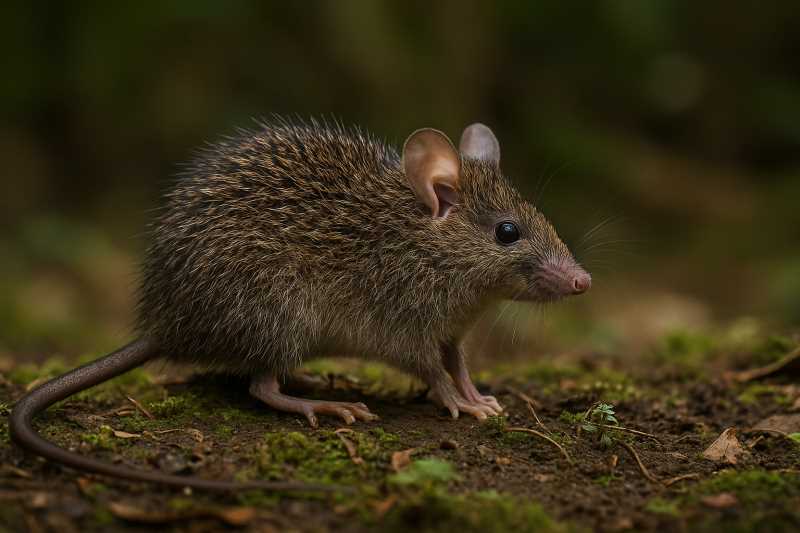
The Spiny Moss Mouse is a small, distinctive rodent characterized by its spiny fur, which is an unusual feature among rodents. This spiny texture is not only for protection but also serves as a unique identifying characteristic. Typically, individuals weigh between 20 to 40 grams, with a body length ranging from 10 to 15 centimeters, not including the tail, which adds another 10 to 12 centimeters.
The fur of the Spiny Moss Mouse is primarily greyish-brown, blending seamlessly with its mossy habitat. What makes its fur particularly interesting is the presence of stiff, spine-like hairs interspersed among softer fur, providing an armor-like quality. This adaptation may help deter predators and protect against environmental elements.
Their eyes are relatively large, an adaptation likely aiding in low-light vision, as these mice are predominantly nocturnal. The ears are rounded and sensitive, enhancing their auditory capabilities, which are crucial for detecting predators and communicating with conspecifics.
Range and Habitat
The Spiny Moss Mouse is endemic to the Philippines, with its range limited to specific islands within the archipelago. It is primarily found in montane and mossy forests, thriving in high-altitude environments where dense moss and leaf litter provide ample cover and food resources.
These mice prefer habitats with high humidity and abundant vegetation, which offer both food and protection. The thick moss covering the forest floor not only serves as a food source but also as a crucial component of their nesting material. The altitudinal range of the Spiny Moss Mouse typically spans from 1,000 to 2,500 meters above sea level, where cooler temperatures prevail.
Behavior and Diet
The Spiny Moss Mouse is primarily nocturnal, with most of its activities occurring under the cover of darkness. This behavior minimizes the risk of predation and aligns with the activity patterns of many of its prey and food sources.
Dietarily, the Spiny Moss Mouse is omnivorous, feeding on a varied menu that includes seeds, fruits, insects, and other small invertebrates. Its strong, sharp incisors are well-adapted for gnawing through tough plant material and hard-shelled insects.
Socially, these mice are relatively solitary, except during the breeding season when males and females come together. Their solitary nature is likely an adaptation to their nutrient-scarce environment, reducing competition for limited resources.
Identification Tips (field recognition cues)
Identifying the Spiny Moss Mouse in the wild requires keen observation and familiarity with its unique characteristics:
- Spiny Fur: Look for the distinctive spiny texture of the fur, which can appear as small, raised bumps among softer hairs.
- Size and Shape: Note its small size and elongated body shape, typical of many forest-dwelling rodents.
- Coloration: Observe the greyish-brown coloration that blends with the mossy forest floor.
- Behavior: Watch for nocturnal activity patterns and solitary behavior, except during the breeding season.
- Vocalizations: Listen for high-pitched squeaks or rustling sounds in the underbrush, indicative of their presence.
Conservation Status (with threats and protections)
The Spiny Moss Mouse is currently classified as Near Threatened on the IUCN Red List. The primary threats to its survival include habitat destruction due to logging, agricultural expansion, and human settlement. As its habitat is restricted to specific montane regions, any alteration or degradation can have significant impacts on its populations.
Conservation efforts are focused on protecting the remaining montane forests in the Philippines. Legal protections for these habitats, coupled with reforestation projects, are vital for the survival of the Spiny Moss Mouse. Additionally, public awareness campaigns highlighting the ecological importance of these mice can help garner support for conservation initiatives.
Frequently Asked Questions
What makes the Spiny Moss Mouse unique among rodents?
The Spiny Moss Mouse is unique due to its spiny fur, which provides protection against predators and environmental elements. This adaptation is relatively rare among rodents and serves as a notable field identification cue.
Where can the Spiny Moss Mouse be found?
The Spiny Moss Mouse is endemic to the Philippines, specifically inhabiting the montane and mossy forests of certain islands. Its range is limited to high-altitude areas with dense vegetation.
What are the main threats to the Spiny Moss Mouse?
The primary threats include habitat destruction from logging and agricultural expansion, as well as human encroachment. Conservation efforts focus on habitat protection and restoration.
How does the Spiny Moss Mouse adapt to its environment?
Adaptations include spiny fur for protection, nocturnal behavior to avoid predators, and a varied omnivorous diet that allows it to exploit available resources in its habitat.
What is being done to protect the Spiny Moss Mouse?
Conservation efforts include legal protection of habitats, reforestation projects, and public awareness campaigns to highlight the importance of preserving this species and its environment.
Related posts