The Enchanting Red-bellied Paradise Flycatcher: A Detailed Exploration
The Red-bellied Paradise Flycatcher (Terpsiphone rufiventer) is a captivating bird species that graces the tropical forests of Africa. Known for its striking appearance and fascinating behaviors, this bird is a favorite among bird watchers and ornithologists alike. In this article, we delve into the characteristics, habitat, behavior, and conservation status of this remarkable species.
Characteristics
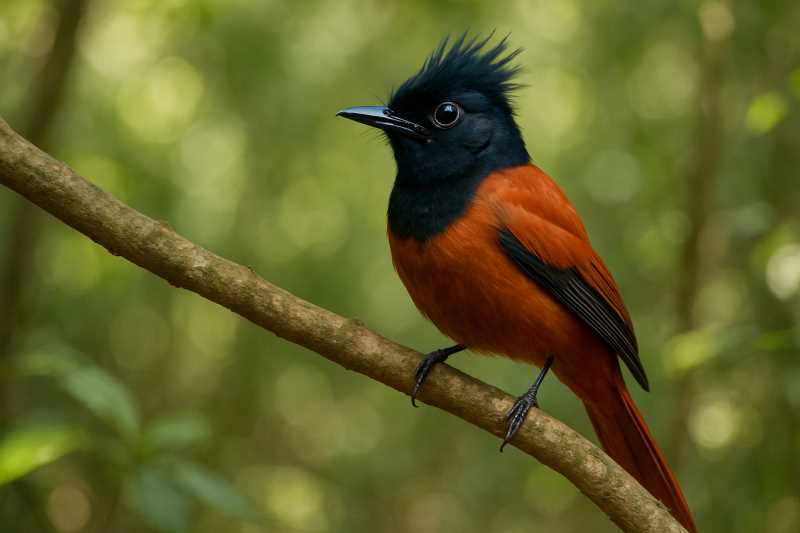
The Red-bellied Paradise Flycatcher is a medium-sized bird, with males typically measuring around 18-20 cm in length, while females are slightly smaller. The most distinguishing feature of this species is the vivid red or rufous coloring on its belly, which contrasts beautifully with its dark upperparts. The males are particularly striking, with long tail streamers that can add an additional 20 cm to their overall length, making them a spectacular sight in flight.
Males and females exhibit sexual dimorphism, with males sporting a glossy black head and back, while the females have a more subdued brownish-black hue. The iridescent black crown and face of the male give it a regal appearance, enhanced by the bright blue eye-ring that stands out strikingly against the dark plumage.
Habitat and Distribution
The Red-bellied Paradise Flycatcher is native to the tropical and subtropical forests of West and Central Africa. It can be found in countries such as Nigeria, Ghana, Cameroon, and the Democratic Republic of the Congo. These birds prefer dense, humid forests, where they can find ample food and nesting sites. They are also adaptable and can be found in secondary forests and plantations, although they thrive best in undisturbed habitats.
These flycatchers are non-migratory, remaining within their home ranges throughout the year. Their presence in a variety of forested environments highlights their adaptability, although deforestation and habitat destruction pose significant threats to their populations.
Behavior and Diet
The Red-bellied Paradise Flycatcher is an insectivorous bird, primarily feeding on a variety of insects and arthropods. They are adept hunters, often seen flitting through the forest canopy, catching insects in mid-air with remarkable agility. Their diet includes beetles, caterpillars, spiders, and occasionally small fruits.
These birds are known for their acrobatic flight patterns, which they use not only to catch prey but also to evade predators. Their long tail streamers, while beautiful, are also functional, aiding in maneuverability and balance during flight.
During the breeding season, which varies depending on the geographical location, males become particularly territorial. They perform elaborate courtship displays, flaring their tails and engaging in aerial chases to attract females. Once paired, both the male and female participate in nest building, often selecting a sheltered spot in the dense foliage to construct their cup-shaped nests.
Reproduction
The breeding habits of the Red-bellied Paradise Flycatcher are fascinating. After mating, the female lays a clutch of 2-3 eggs, which are incubated for about 14-16 days. Both parents share the responsibility of incubating the eggs and feeding the chicks once they hatch.
The chicks are altricial, meaning they are born relatively helpless and require significant parental care. They fledge after about 12-15 days but remain dependent on their parents for food and protection for several weeks after leaving the nest.
Conservation Status
The Red-bellied Paradise Flycatcher is currently listed as Least Concern by the International Union for Conservation of Nature (IUCN). However, like many forest-dwelling species, it faces potential threats from habitat loss due to logging, agriculture, and urban expansion. Conservation efforts are essential to ensure that these birds continue to thrive in their natural habitats.
Efforts to protect their habitats include the establishment of protected areas and the promotion of sustainable land-use practices. Raising awareness about the importance of these birds in maintaining healthy ecosystems is also crucial.
Conclusion
The Red-bellied Paradise Flycatcher is a stunning example of avian beauty and adaptability. Its vibrant plumage, agile flight, and engaging behaviors make it a fascinating subject for study and admiration. As we continue to learn about and protect this species, we contribute to the preservation of the rich biodiversity of Africa’s tropical forests.
By appreciating and conserving these birds and their habitats, we ensure that future generations can also enjoy the splendor of the Red-bellied Paradise Flycatcher.
Related posts