Introduction
Thomas’s langur (Presbytis thomasi), also known as Thomas’s leaf monkey, is a fascinating primate species native to the lush rainforests of Sumatra, Indonesia. This species is a member of the Cercopithecidae family and is notable for its distinctive appearance and arboreal lifestyle. As with many other primate species, Thomas’s langur plays a crucial role in its ecosystem, contributing to seed dispersal and maintaining the health of forest habitats. However, like many other primates, Thomas’s langur faces threats from habitat destruction and hunting, making its conservation a pressing concern.
Physical Description
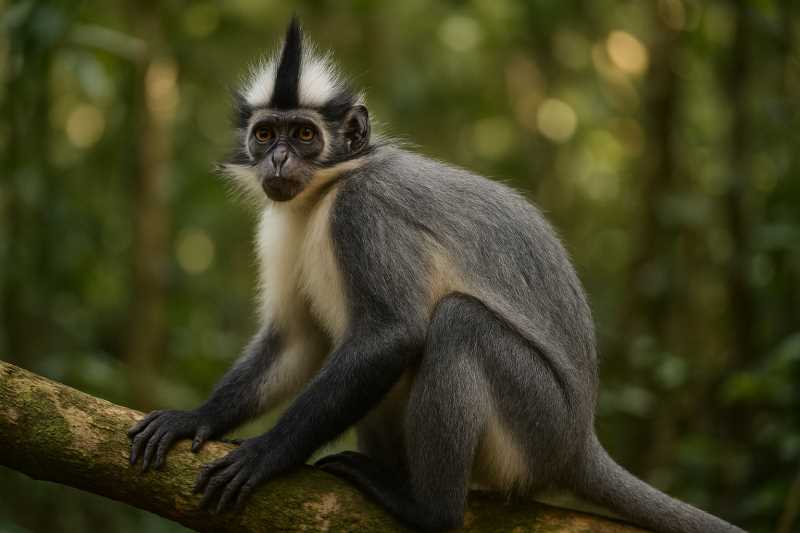
Thomas’s langur is a medium-sized primate, characterized by its slender build and long limbs, which are perfectly adapted for an arboreal existence. Adults typically weigh between 5 to 8 kilograms and measure approximately 40 to 60 centimeters in body length, with a tail that can extend up to 80 centimeters.
One of the most distinctive features of Thomas’s langur is its striking coloration. The fur on its body is predominantly gray, with a darker dorsal stripe running from the head to the base of the tail. The face is relatively hairless, revealing a pale complexion with striking dark eye rings and a small, flat nose. Its limbs and tail are often darker than the rest of the body, providing a stark contrast that aids in identification.
Juveniles are born with a lighter, almost white, fur which gradually darkens as they mature. The transition from juvenile to adult coloration is gradual, helping to maintain camouflage within the dense forest canopy.
Range and Habitat
Thomas’s langur is endemic to the island of Sumatra, Indonesia, where it inhabits the northern regions, particularly in Aceh and North Sumatra provinces. This primate is primarily found in tropical rainforests, including both lowland and montane forests, up to elevations of about 1,500 meters.
These langurs prefer primary forests but can also be found in secondary forests and logged areas, although their presence in degraded habitats is often limited due to the lack of food resources and increased exposure to predators and human activities. The dense canopy of these forests provides the ideal environment for Thomas’s langur, offering both food and protection from ground-dwelling predators.
Behavior and Diet
Thomas’s langur is a diurnal and arboreal species, spending most of its life in the forest canopy. These primates are social animals, typically living in groups of 5 to 15 individuals, although larger groups have been observed. A typical group consists of a dominant male, several females, and their offspring.
Communication within groups is maintained through a combination of vocalizations, facial expressions, and body postures. Vocalizations include a range of calls used to maintain group cohesion, alert others to danger, and establish territory.
The diet of Thomas’s langur is primarily folivorous, consisting of young leaves, fruits, seeds, flowers, and occasionally insects. As selective feeders, they play a vital role in seed dispersal, aiding in the regeneration of their forest habitats. The langurs have a specialized digestive system with a large, multi-chambered stomach that allows them to efficiently digest tough plant materials.
Identification Tips (Field Recognition Cues)
Identifying Thomas’s langur in the wild requires careful observation of several key features:
- Coloration: Look for the distinctive gray fur with darker dorsal stripes and dark limbs.
- Facial Features: Note the pale face with dark eye rings and small, flat nose.
- Behavior: Observe their arboreal habits and social behavior in groups.
- Vocalizations: Listen for their unique calls, which can help locate them in dense forests.
When observing in the field, patience and quiet observation are essential, as these primates are sensitive to disturbances and can be elusive.
Conservation Status (with Threats and Protections)
Thomas’s langur is currently classified as Near Threatened by the International Union for Conservation of Nature (IUCN). The primary threats facing this species are habitat destruction due to logging, agricultural expansion, and the palm oil industry. Illegal hunting for bushmeat and the pet trade also poses significant risks.
Conservation efforts for Thomas’s langur include habitat protection and restoration, anti-poaching patrols, and community-based conservation programs. Protected areas such as Gunung Leuser National Park provide crucial sanctuaries for these primates, but continued efforts are necessary to ensure their long-term survival.
Frequently Asked Questions
What do Thomas’s langurs eat? Thomas’s langurs primarily feed on young leaves, fruits, seeds, flowers, and occasionally insects. Their diet is mainly folivorous, and they have a specialized digestive system to process tough plant materials.
Where can Thomas’s langurs be found? Thomas’s langurs are endemic to the northern regions of Sumatra, Indonesia, particularly in the provinces of Aceh and North Sumatra. They inhabit tropical rainforests, including both lowland and montane forests.
What is the conservation status of Thomas’s langur? Thomas’s langur is currently classified as Near Threatened by the IUCN. Major threats include habitat destruction, illegal hunting, and the pet trade.
How do Thomas’s langurs communicate? Thomas’s langurs communicate using a variety of vocalizations, facial expressions, and body postures. Their calls help maintain group cohesion, alert others to danger, and establish territory boundaries.
What are the main threats to Thomas’s langur? The primary threats to Thomas’s langur are habitat destruction due to logging, agricultural expansion, and the palm oil industry, as well as illegal hunting for bushmeat and the pet trade.
Related posts