Introduction
The Strange Big-eared Brown Bat, scientifically known as Histiotus alienus, represents a fascinating yet lesser-known species within the bat family. As an integral component of its ecosystem, this bat plays a significant role in pest control and plant pollination. Despite its vital ecological contributions, the Strange Big-eared Brown Bat remains under-researched, often overshadowed by more charismatic bat species. This article delves into the nuances of the Strange Big-eared Brown Bat, exploring its physical characteristics, habitat, behavior, diet, and conservation status, while also providing identification tips for enthusiasts and researchers alike.
Physical Description
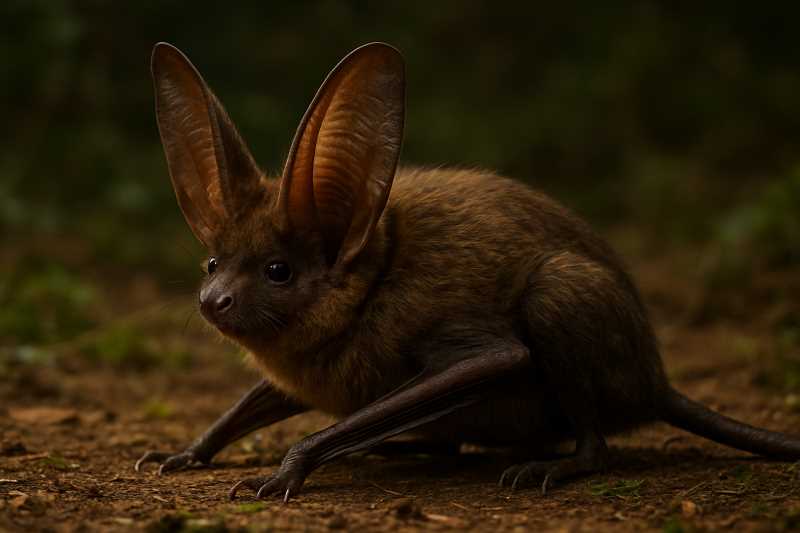
The Strange Big-eared Brown Bat is distinguishable by its large, prominent ears, which are significantly longer than those of many other bat species. These ears not only contribute to its unique appearance but also enhance its echolocation abilities, allowing it to detect prey and navigate its surroundings with precision. Typically, the bat exhibits a brownish fur coat, with subtle variations ranging from light to dark brown. Its body length averages around 9 to 12 centimeters, with a wingspan of approximately 28 to 32 centimeters, making it a medium-sized bat.
The facial features of the Strange Big-eared Brown Bat include a relatively short, broad snout and large, expressive eyes. Its wing membranes are dark and translucent, contributing to its agile flight capabilities. The tail, partially enclosed within the membrane, aids in maneuverability during flight and while capturing prey. Overall, the bat’s physical traits are well-adapted to its nocturnal lifestyle and diverse range of habitats.
Range and Habitat
The Strange Big-eared Brown Bat is predominantly found in South America, with its range extending from the Andean regions of Colombia and Ecuador to parts of Peru, Bolivia, and northern Argentina. These bats are typically associated with montane and subtropical forests, where they roost in tree cavities, caves, and occasionally man-made structures.
The altitudinal range of this species is quite broad, encompassing elevations from lowland areas near sea level to high-altitude regions exceeding 3,000 meters. This adaptability to varied habitats highlights the species’ resilience and ecological importance. However, the availability of suitable roosting sites and foraging grounds is crucial for its survival, as habitat loss due to deforestation and human encroachment poses a significant threat.
Behavior and Diet
The Strange Big-eared Brown Bat is a nocturnal species, emerging at dusk to forage for food. Its diet primarily consists of insects, including moths, beetles, and other small invertebrates. The bat employs echolocation to detect and capture prey, using its keen hearing and agile flight to hunt in the dark.
Socially, these bats are known to form small colonies, often roosting communally to conserve warmth and energy. During the breeding season, typically in the warmer months, females give birth to one or two pups. The young are cared for in nursery roosts, where they remain until they are capable of independent flight and foraging.
Identification Tips
Field recognition of the Strange Big-eared Brown Bat can be challenging due to its nocturnal habits and resemblance to other bat species. However, several key features can aid in identification:
- Ears: The most distinctive feature is its large, elongated ears, which are noticeably longer than those of similar species.
- Fur Color: A uniform brownish coat, with potential variations in shade, distinguishes it from species with more contrasting color patterns.
- Size: Medium-sized, with a wingspan of 28 to 32 centimeters, larger than many small bat species but smaller than some larger counterparts.
- Flight Pattern: Agile and maneuverable, often seen making quick, darting movements while hunting insects.
Conservation Status
As of the latest assessments, the Strange Big-eared Brown Bat is listed as Near Threatened on the IUCN Red List. The primary threats to this species include habitat destruction, deforestation, and the conversion of land for agricultural use. Additionally, climate change poses a growing threat, potentially altering the availability of suitable habitats and prey.
Conservation efforts are crucial to the survival of this species. Protecting forested areas and implementing sustainable land-use practices can help preserve the natural habitats of the Strange Big-eared Brown Bat. Furthermore, public awareness and education about the ecological roles of bats are essential in fostering coexistence and reducing human-wildlife conflicts.
Frequently Asked Questions
What is the main diet of the Strange Big-eared Brown Bat?
The Strange Big-eared Brown Bat primarily feeds on insects, including moths and beetles, which it hunts using echolocation.
Where can I find the Strange Big-eared Brown Bat?
This species is found in South America, particularly in the Andean regions of Colombia, Ecuador, Peru, Bolivia, and northern Argentina.
How can I identify the Strange Big-eared Brown Bat in the field?
Look for its large, elongated ears, medium size, and uniform brownish fur coat. Its agile flight patterns, often observed while hunting, can also be a clue.
Is the Strange Big-eared Brown Bat endangered?
Currently, it is listed as Near Threatened due to habitat loss and other environmental pressures. Conservation efforts are essential to prevent further decline.
What adaptations help the Strange Big-eared Brown Bat survive?
Its large ears enhance echolocation abilities, and its agile flight aids in capturing prey. Its social behavior in roosting colonies also aids in survival.
Related posts