Understanding the Fuscous Flycatcher: A Comprehensive Study
Introduction
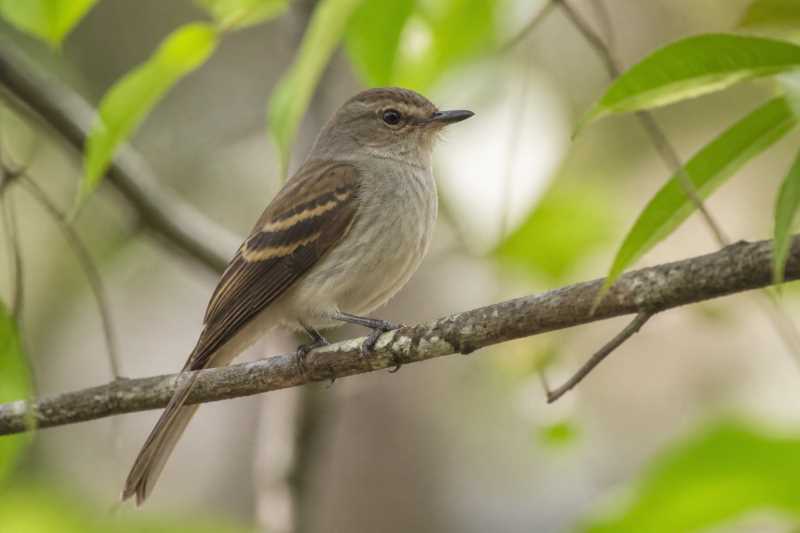
The Fuscous Flycatcher, scientifically known as Cnemotriccus fuscatus, is a small passerine bird belonging to the family Tyrannidae. This bird species is not only fascinating due to its subtle charm and complex behaviors but also for its role in the ecosystems it inhabits. This article delves into the Fuscous Flycatcher’s taxonomy, habitat, behavior, diet, reproduction, and conservation status.
Taxonomy and Classification
Cnemotriccus fuscatus was first described in the early 19th century, and its taxonomy has been subject to revisions as ornithologists have gained a deeper understanding of its relationships with other flycatchers. The genus Cnemotriccus is closely related to other genera within the Tyrannidae family, which is renowned for its diversity and the wide array of flycatchers it encompasses.
The species is divided into several subspecies, each adapted to their specific geographical locations. The most recognized subspecies include C. f. bimaculatus, C. f. fuscatus, and C. f. fuscatior, among others. These subspecies vary slightly in plumage coloration and size, which are adaptations to their distinct environments.
Habitat and Distribution
The Fuscous Flycatcher is primarily found in South America, with a range extending from the eastern slopes of the Andes to the lowland forests of the Amazon Basin. It inhabits a variety of forest types, including subtropical or tropical moist lowland forests, subtropical or tropical moist montane forests, and heavily degraded former forests.
These birds are particularly adapted to undergrowth and edge habitats, where they can be observed flitting between branches in search of food. Their preference for dense shrubbery and lower forest strata makes them somewhat elusive, although their vocalizations often betray their presence.
Behavior and Ecology
The Fuscous Flycatcher is known for its active foraging behavior. It is primarily insectivorous, feeding on a wide variety of arthropods. This species employs a sit-and-wait strategy, darting out from a perch to catch prey in mid-air or glean insects from foliage. Its diet may also include small fruits and seeds, especially during times when insect prey is less abundant.
Socially, the Fuscous Flycatcher is often seen alone or in pairs, but it can sometimes be part of mixed-species foraging flocks. Such associations are beneficial for increasing feeding efficiency and reducing predation risk.
Vocalizations
One of the key identifying features of the Fuscous Flycatcher is its vocal repertoire. The bird’s calls are typically simple and repetitive, often described as a series of sharp "pip" or "peet" notes. These vocalizations play a crucial role in territory establishment and mate attraction. Given the dense habitats they reside in, vocal communication is more reliable than visual cues.
Reproduction and Lifespan
Breeding typically occurs during the wet season, which varies depending on the geographical location. The nest is usually a cup-shaped structure made from plant fibers, leaves, and twigs, strategically placed in bushes or low trees. Clutch size generally ranges from two to three eggs, which are incubated by the female.
Both parents are involved in feeding the chicks, which fledge after approximately two weeks. The fledglings remain dependent on their parents for several weeks post-fledging, learning crucial survival skills.
Conservation Status
Currently, the Fuscous Flycatcher is listed as a species of Least Concern by the International Union for Conservation of Nature (IUCN). This status is attributed to its wide distribution and presumably large population. However, habitat destruction, particularly deforestation in the Amazon, poses a significant threat to local populations.
Efforts to conserve their habitats are crucial. Protecting large areas of forest and restoring degraded habitats will help ensure the survival of the Fuscous Flycatcher and the myriad of other species that share its environment.
Conclusion
The Fuscous Flycatcher, Cnemotriccus fuscatus, is a remarkable species that plays a vital role in its ecosystem as both predator and prey. Its adaptability to different environments and its unique behaviors make it a subject of interest for ornithologists and birdwatchers alike. Despite being currently stable, ongoing conservation efforts are essential to preserve this species amid growing environmental challenges.
As we continue to study and understand the Fuscous Flycatcher, it remains a poignant reminder of the intricate web of life that thrives in the world’s forests, urging us to protect these vital ecosystems for future generations.
References
- Schulenberg, T. S., et al. (2010). Birds of Peru. Princeton University Press.
- Ridgely, R. S., & Tudor, G. (2009). Field Guide to the Songbirds of South America: The Passerines. University of Texas Press.
- BirdLife International (2020). "Cnemotriccus fuscatus."
Acknowledgments
Special thanks to the ornithological community for their ongoing research and dedication to understanding avian species worldwide.
Related posts