Introduction
Fea’s Petrel (Pterodroma feae) is a captivating seabird species that belongs to the Procellariidae family. This elusive bird is named after the Italian ornithologist Leonardo Fea, who contributed significantly to the study of avian species. Fea’s Petrel is known for its graceful flight and mysterious behavior, spending most of its life at sea and only coming to land to breed. As a pelagic bird, it is predominantly found in the North Atlantic Ocean, particularly around the Macaronesian islands.
Taxonomy and Nomenclature
Fea’s Petrel is part of the genus Pterodroma, which comprises several similar species of gadfly petrels. The scientific name, Pterodroma feae, is a tribute to Leonardo Fea, recognizing his contributions to ornithology. It is sometimes confused with other species in the complex, such as Zino’s Petrel (Pterodroma madeira) and Desertas Petrel (Pterodroma deserta), due to their similar appearances and overlapping ranges.
Physical Characteristics
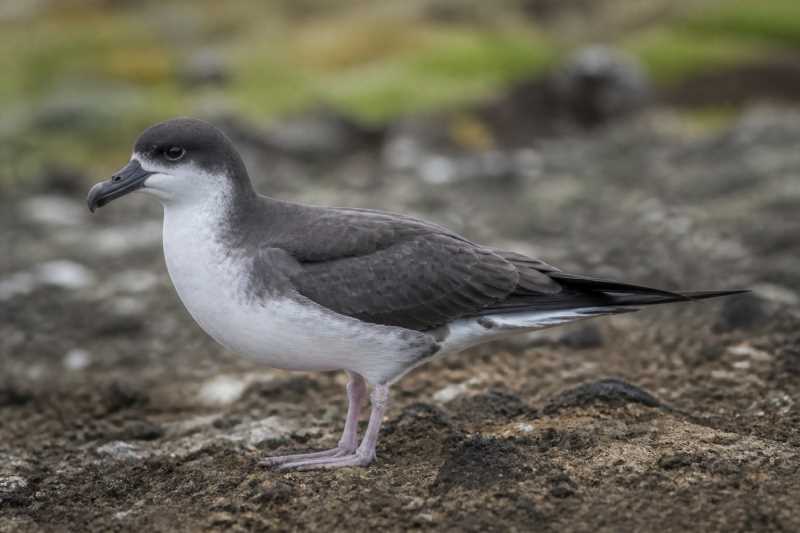
Fea’s Petrel is a medium-sized seabird, measuring approximately 30 to 40 centimeters in length with a wingspan ranging from 80 to 90 centimeters. The bird’s plumage is primarily grey and white, with a distinctive dark ‘M’ pattern across the wings, which is a common characteristic among petrels. The underparts are mostly white, while the upperparts are grey, providing a contrasting appearance that aids in identification. The petrel’s beak is black and hooked, adapted for its diet of squid, fish, and crustaceans.
Habitat and Distribution
Fea’s Petrel is predominantly found in the North Atlantic Ocean, with its breeding grounds located on the Macaronesian islands, including the Cape Verde Islands and the Desertas Islands of Madeira. During the non-breeding season, these birds disperse across the Atlantic, with sightings reported as far north as the Azores and across to the coasts of North and South America.
Breeding and Life Cycle
The breeding season for Fea’s Petrel typically begins in late spring. These birds are monogamous and usually return to the same breeding site each year. They nest in burrows or crevices on steep, remote cliffs, which provide protection from predators. The female lays a single egg, and both parents share the responsibility of incubation, which lasts for about 50 days. After hatching, the chick is fed regurgitated food by both parents and fledges approximately 90 days later.
Behavior and Ecology
Fea’s Petrel is a pelagic bird, which means it spends the majority of its life at sea, only returning to land to breed. Its flight is characterized by graceful, gliding movements, often in large, sweeping arcs. This bird is highly adapted to life on the open ocean, using the wind currents to travel efficiently over long distances. Fea’s Petrel is known for its elusive nature, making it a challenging species to study in the wild.
Conservation Status
As of the latest assessments, Fea’s Petrel is classified as Near Threatened on the IUCN Red List. The primary threats to this species include habitat destruction on breeding islands, introduced predators such as rats and cats, and climate change, which affects food availability and breeding success. Conservation efforts are focused on protecting breeding habitats and controlling introduced predators to ensure the survival of this enigmatic bird.
Conclusion
Fea’s Petrel is a remarkable bird that continues to intrigue ornithologists and bird enthusiasts alike. Its elusive nature and majestic presence in the vastness of the ocean make it a symbol of the mysteries of the marine world. Continued research and conservation efforts are essential to protect this species and its habitat, ensuring that future generations can also marvel at the beauty and wonder of Fea’s Petrel.
References
1. BirdLife International. (2021). Species factsheet: Pterodroma feae.
2. Brooke, M. (2004). Albatrosses and Petrels Across the World. Oxford University Press.
3. Shirihai, H., & Bretagnolle, V. (2015). The complete guide to Antarctic wildlife. Princeton University Press.
Meta Title
Fea’s Petrel: A Mysterious Seabird of the Atlantic
Meta Description
Explore the fascinating world of Fea’s Petrel, a captivating seabird known for its elusive nature and majestic flight across the North Atlantic Ocean.
Related posts