Introduction
The Bay-backed Shrike (Lanius vittatus), a fascinating member of the shrike family, is a bird that captivates ornithologists and birdwatchers alike with its striking appearance and intriguing behavior. Found predominantly in the Indian subcontinent, this species is known for its vivid plumage and predatory habits. This article explores the taxonomy, habitat, behavior, and conservation status of the Bay-backed Shrike, providing an in-depth understanding of its role in the ecosystem and the challenges it faces.
Taxonomy and Description
Belonging to the family Laniidae, the Bay-backed Shrike is scientifically classified as Lanius vittatus. The genus name ‘Lanius’ is derived from the Latin word for ‘butcher,’ reflecting the bird’s carnivorous diet and its habit of impaling prey on thorns. The species epithet ‘vittatus’ means ‘banded’ or ‘striped,’ a nod to its distinctive plumage.
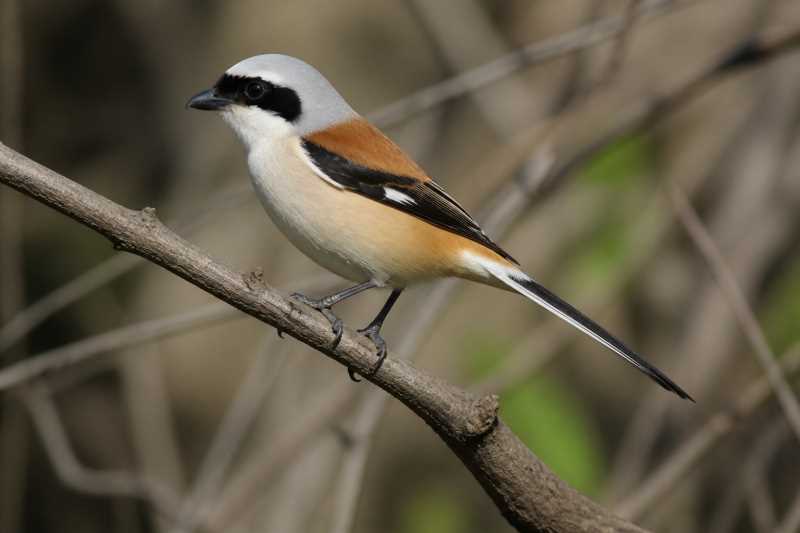
The Bay-backed Shrike is a small to medium-sized bird, measuring between 17 to 20 cm in length. It is easily identifiable by its striking coloration. The bird’s back and rump are a rich chestnut brown, contrasting sharply with its black mask that extends from the beak through the eyes. The underparts are primarily white or pale, with a slight buff tinge on the sides. The wings are a mix of black, white, and brown, adding to its vivid appearance.
Habitat and Distribution
The Bay-backed Shrike is predominantly found across the Indian subcontinent, including India, Pakistan, Nepal, and Sri Lanka. It prefers open habitats such as scrublands, farmlands, and forest edges where it can hunt and nest. The bird is highly adaptable and can be found at various altitudes, from plains to hilly regions.
This species is not migratory but may exhibit local movements in response to seasonal changes in food availability. Its ability to thrive in various habitats has contributed to its widespread presence in its range.
Behavior and Ecology
Bay-backed Shrikes are known for their predatory behavior, earning them the nickname ‘butcher birds.’ They primarily feed on insects, small mammals, and birds, often capturing prey larger than themselves. One of their unique behaviors is impaling prey on sharp objects such as thorns or barbed wire, a method used to store food for later consumption or to attract mates.
These birds are territorial, especially during the breeding season, which occurs from March to June. They build cup-shaped nests in shrubs or low trees, where the female lays 3 to 6 eggs. Both parents share the responsibility of incubating the eggs and feeding the young.
Bay-backed Shrikes are also known for their vocalizations, which include a variety of harsh calls and melodious whistles. These calls play a crucial role in communication, especially in defending territory and attracting mates.
Conservation Status
Currently, the Bay-backed Shrike is listed as ‘Least Concern’ by the International Union for Conservation of Nature (IUCN). Despite being widespread, the species faces threats from habitat loss and degradation due to agricultural expansion and urbanization. Pesticide use in farmlands also poses a significant risk by reducing insect populations, the bird’s primary food source.
Conservation efforts for the Bay-backed Shrike focus on habitat preservation and raising awareness about the ecological role of shrikes. Protecting natural habitats and promoting sustainable agricultural practices are crucial for ensuring the survival of this species.
Conclusion
The Bay-backed Shrike is a remarkable bird that exemplifies the beauty and complexity of avian life. Its striking appearance, intriguing behavior, and adaptability make it a subject of interest for bird enthusiasts and researchers. While the species is currently not at immediate risk, ongoing conservation efforts are essential to safeguard its future. By understanding and appreciating the ecological role of the Bay-backed Shrike, we can contribute to the conservation of biodiversity and the health of our ecosystems.
Related posts