Introduction
The Spotted Nightjar (Eurostopodus argus) is a nocturnal or crepuscular bird of Australia’s open inland landscapes. It is recognised by its intricately mottled plumage, broad white spots on the outer wing feathers and habit of roosting on the ground. The species is also known as the Spotted Eared-Nightjar in some sources.
Physical Description
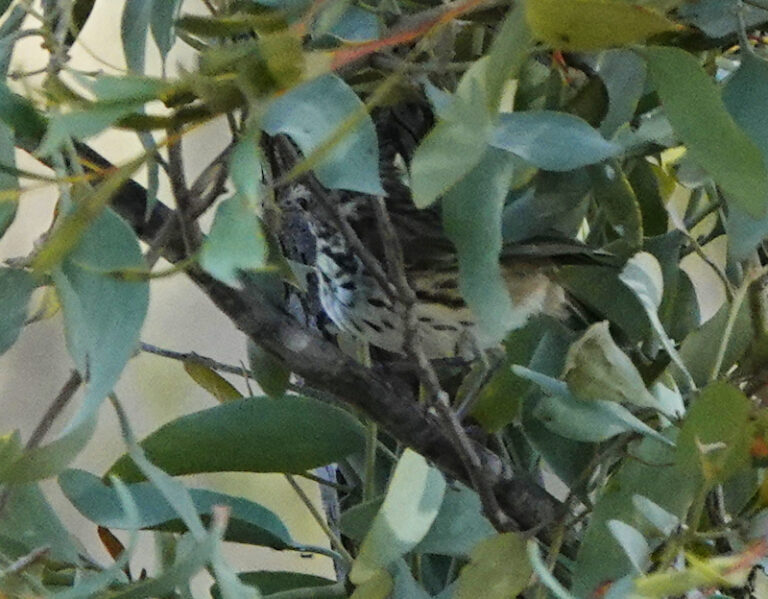
The Spotted Nightjar is a medium-sized nightjar measuring approximately 27–35 cm in length, with a wingspan of about 60–72 cm. Its plumage is predominantly grey, brown, black and buff, with fine flecking and barring that provide effective camouflage among leaf litter, stones, bare soil and dry vegetation.
Large cream or white spots on the outer primary feathers form a conspicuous pale panel when the bird is flushed or seen in flight. Unlike the Large-tailed Nightjar, the Spotted Nightjar lacks prominent white markings on the tail. It also has a relatively long tail and shorter wings than the White-throated Nightjar.
The sexes are similar in general appearance, although individual variation occurs. Juvenile and immature birds may have less clearly defined markings, and immature plumage is not as well documented as adult plumage. The large eyes, broad bill and wide gape are typical adaptations of nightjars, which catch flying insects in low light.
Range and Habitat
The Spotted Nightjar occurs widely across mainland Australia, particularly in inland, northern and western regions. It is associated mainly with dry, open country rather than dense rainforest, including open eucalypt woodland, mallee, mulga, shrubland, savannah woodland, spinifex and tussock grassland. It often favours stony or sandy ridges, escarpments, clearings and areas with sparse ground cover suitable for daytime roosting and nesting.
The species is a partial migrant. Some birds move northwards or towards coastal areas during the cooler months, and migrating flocks have been reported. It has also been recorded as a visitor on islands in northern Australia and in parts of Indonesia, including the Lesser Sunda and Aru island groups. Records from outside Australia should be interpreted in the context of this seasonal movement and occasional dispersal.
Behaviour and Diet
Spotted Nightjars are crepuscular and nocturnal. They become active around dusk, may continue feeding through the night and can also be seen shortly before dawn. During daylight hours they usually remain motionless on the ground, relying on their cryptic plumage. Typical roost sites include bare soil, leaf litter, rocky ground, open grassy clearings, tracks and the edges of shrubs or woodland.
The species feeds mainly on nocturnal insects, including beetles, moths, crickets, grasshoppers and mantises. It catches prey in flight, often hunting low over open ground or making short sallies from a low perch. Spotted Nightjars have also been observed drinking while flying over water.
Breeding takes place from late winter through summer, with timing varying across the range and often influenced by local conditions and rainfall. No conventional nest is built. One or two eggs are laid directly on bare ground or among leaf litter, twigs, bark or stones, sometimes in a shallow depression. Both parents participate in incubation and brood care. The young can move soon after hatching but remain dependent on the adults for food and protection until they become capable of sustained flight.
Identification Tips
- Look for a medium-sized, heavily mottled nightjar resting on bare ground, beside a track or among stones and leaf litter.
- In flight, note the broad white or cream spots on the outer wing feathers.
- The tail lacks the strong white markings shown by the Large-tailed Nightjar.
- The Spotted Nightjar is generally smaller and more long-tailed in appearance than the White-throated Nightjar, with shorter wings and a different wing-marking pattern.
- Its habit of flushing from a road or track at night, flying low and then settling on the ground, is often more useful than trying to locate it at rest.
- At night, listen for its distinctive vocalisations, described in Australian field guides as a rising, laughing call that may end in a metallic-sounding gurgle.
Conservation Status
The Spotted Nightjar is currently assessed as Least Concern at global level. It remains widespread, but its nocturnal habits make population trends difficult to measure reliably. Regional concerns include clearing of open woodland and shrubland, degradation of remnant vegetation through overgrazing, changes in land use and disturbance of breeding habitat. Maintaining connected areas of native open vegetation, protecting undisturbed ground suitable for roosting and nesting, and reducing unnecessary disturbance during the breeding season are appropriate conservation measures.
Frequently Asked Questions
Where does the Spotted Nightjar live?
It occurs across much of mainland Australia, especially in dry inland and northern regions. It uses open woodland, mallee, mulga, shrubland, savannah, spinifex and tussock grassland, often where rocky or sandy ground is available.
Is the Spotted Nightjar nocturnal?
Yes. It is mainly active at night and during twilight, while spending the day resting motionless on the ground or in other concealed open sites.
What does the Spotted Nightjar eat?
Its diet consists mainly of flying insects, including beetles and moths, as well as crickets, grasshoppers and mantises. It usually captures prey in flight.
Does the Spotted Nightjar build a nest?
No. It lays its eggs directly on the ground, often among leaf litter, twigs, bark, stones or bare soil. Both parents help incubate the eggs and care for the young.
How can the Spotted Nightjar be identified in flight?
The most useful field mark is the broad pale spotting on the outer wing feathers. The species lacks the prominent white tail markings of the Large-tailed Nightjar.
References
- Australian Museum of Natural History. n.d. Nocturnal Birds of Australia: Nightjars. Museum and Art Gallery of the Northern Territory. Available at: https://mli.org.au/wp-content/uploads/2020/07/Nocturnal-Birds-Guide.pdf. Accessed 8 September 2026.
- Gill, F., Donsker, D. and Rasmussen, P. (eds). 2026. IOC World Bird List, version 15.2. International Ornithological Committee. Available at: https://www.worldbirdnames.org/. Accessed 8 September 2026.
- Higgins, P. J. (ed.). 1999. Handbook of Australian, New Zealand and Antarctic Birds, Volume 4: Parrots to Dollarbird. Oxford University Press.
- Royal Australasian Ornithologists Union and BirdLife Australia. n.d. HANZAB Taxonomy: Spotted Nightjar, Eurostopodus argus. BirdLife Australia. Available at: https://hanzab.birdlife.org.au/hanzab-taxonomy/hanzab-taxonomy-top/. Accessed 8 September 2026.
- Storr, G. M. 1989. Birds of the Kimberley Region, Western Australia. Records of the Western Australian Museum, Supplement 28. Western Australian Museum. Available at: https://museum.wa.gov.au/sites/default/files/1.%20Storr_0.pdf.
- The Nature Conservancy Australia. 2018. Great Western Woodlands Bird Survey Report. The Nature Conservancy Australia. Available at: https://www.natureaustralia.org.au/content/dam/tnc/nature/en/documents/australia/Great-Western-Woodlands-Bird-Survey-Report.pdf.
- BirdLife Australia. 2011. Carter, M. and Bright, J. “A White-throated Nightjar Eurostopodus mystacalis in southern Victoria.” Australian Field Ornithology 28: 32–37. Available at: https://afo.birdlife.org.au/afo/index.php/afo/article/viewFile/428/412.
- Atlas of Living Australia. n.d. Eurostopodus argus (Hartert, 1892), Spotted Nightjar. Australian Biodiversity Information Facility. Available at: https://bie.ala.org.au/species/https%3A/biodiversity.org.au/afd/taxa/29c3647e-1457-4fb1-b0a3-e31a78e538d1. Accessed 8 September 2026.
Related posts