The Blue-breasted Fairywren (Malurus pulcherrimus) is a stunning and elusive small bird, native to the mallee regions of southern Australia. Known for its vibrant plumage and fascinating social behavior, this species is a prized sighting for birdwatchers exploring the drier habitats of Western Australia and South Australia. Despite its vivid colors, the Blue-breasted Fairywren often remains hidden within dense vegetation, making observations all the more rewarding.
Identification and Appearance
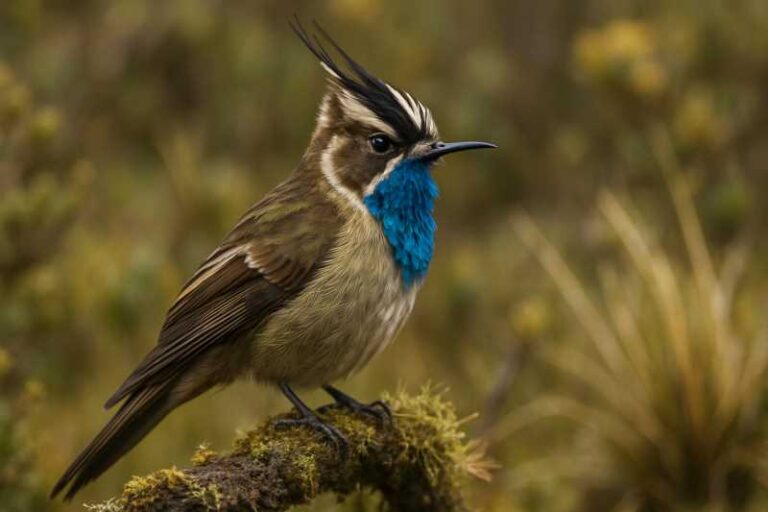
The male Blue-breasted Fairywren in breeding plumage is a striking bird, flaunting a brilliant cobalt-blue crown, nape, and ear coverts, offset by a sky-blue back and shoulder patches. Most distinctive is the deep blue to purplish-blue breast band that gives the species its name, separated from the white belly by a thin black line. The tail is long, dark blue, and typically held upright, a trait shared among fairywrens.
Outside the breeding season, males transition to an “eclipse” plumage that closely resembles the drabber, brown-toned females and juveniles. Females have warm brown upperparts, pale underparts, and faint blue tinges on the wings and tail, with subtle differences in coloration compared to similar species.
Distribution and Habitat
Blue-breasted Fairywrens are largely confined to mallee and heathland environments in southern Western Australia and adjacent areas of South Australia. They are most commonly encountered in undisturbed mallee scrub with a dense understory of spinifex, acacia, and tea-tree, which provides the cover they depend on for feeding and nesting. Their distribution is patchy and localized, often corresponding with specific vegetation types and fire regimes.
These birds are non-migratory and territorial year-round, typically remaining within a small home range. However, they can be vulnerable to habitat fragmentation and inappropriate fire management, which can destroy the protective cover they require for survival.
Behavior and Social Structure
Blue-breasted Fairywrens exhibit the fascinating social dynamics typical of the Malurus genus. They are monogamous breeders but live in cooperative groups that include adult offspring from previous seasons. These helper birds assist with feeding the young and defending territory, increasing the breeding pair’s overall success.
Territorial and active, fairywrens forage in pairs or small groups, hopping through low vegetation and flicking their tails as they search for insects and small arthropods. Males are known for their conspicuous display flights and for presenting yellow petals to females during courtship—a behavior believed to play a role in mate bonding or extra-pair mating attempts.
Breeding and Nesting
The breeding season extends from late winter through summer, with timing influenced by rainfall and local conditions. The female alone constructs the nest, a dome-shaped structure of grasses and bark strips, usually hidden deep within dense shrubs or spinifex clumps.
Clutches typically consist of two to three eggs, and incubation is solely performed by the female. Once hatched, both the male and any helper birds participate in feeding the chicks. Despite the cooperative care, nest predation by snakes and introduced mammals remains a significant threat.
Conservation Status
The Blue-breasted Fairywren is currently listed as Least Concern by the IUCN, but its limited range and specific habitat preferences make it susceptible to environmental change. Land clearing, frequent fire regimes, and degradation of mallee shrublands pose ongoing risks to the species.
Efforts to preserve large tracts of native mallee vegetation, combined with fire management practices that maintain habitat heterogeneity, are critical for the long-term stability of this species. National parks such as Fitzgerald River and Stirling Range are key refuges where Blue-breasted Fairywrens can still be reliably observed.
Observing the Blue-breasted Fairywren
Spotting this elusive wren requires patience, a sharp eye, and careful movement. Birdwatchers should scan low shrub layers in the early morning when birds are most active. Listening for their high-pitched trills and contact calls can also aid in locating them. Binoculars and a telephoto lens are useful tools, as these birds rarely allow close approach.
Field guides often suggest caution when identifying Blue-breasted Fairywrens, as they can be confused with the Splendid Fairywren in regions where their ranges overlap. Close attention to the distinct blue breast and the presence of dark flank patches can help avoid misidentification.
Final Thoughts
The Blue-breasted Fairywren is a charismatic and beautiful example of Australia’s unique avifauna. Its vibrant appearance, intricate social behavior, and dependency on native shrubland ecosystems underscore the importance of conserving Australia’s mallee landscapes. For birders and naturalists alike, a glimpse of this dazzling fairywren is a memorable highlight of any trip through southern Australia’s remote and rugged regions.
Related posts