Introduction
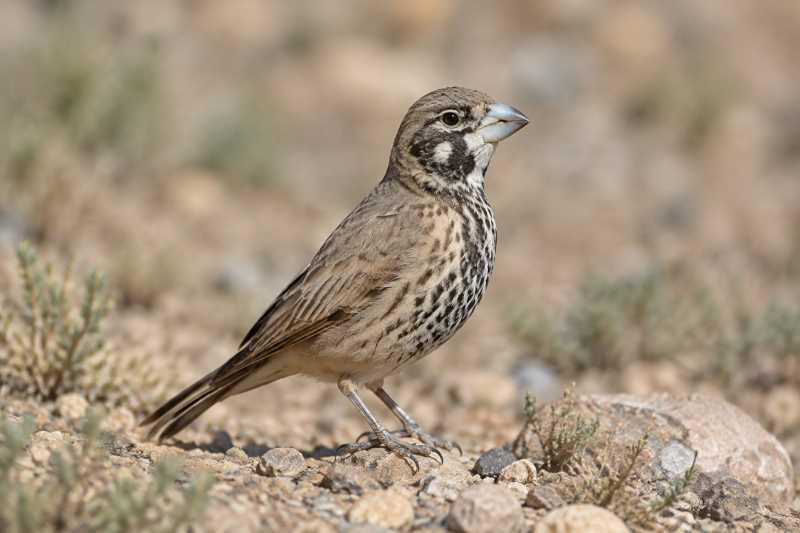
The Thick-billed Lark (Ramphocoris clotbey) is a distinctive avian species known for its robust beak and adaptability to harsh desert environments. This article delves into the key characteristics, habitat, behavior, and conservation status of this remarkable bird, offering insights into its ecological significance and the challenges it faces in the wild.
Taxonomy and Description
Belonging to the family Alaudidae, the Thick-billed Lark is the sole member of the genus Ramphocoris. This species was first described by renowned ornithologist Charles Lucien Bonaparte in 1850. The lark’s scientific name, Ramphocoris clotbey, pays tribute to the French naturalist, Antoine Clot, also known as Clot-Bey.
Physically, the Thick-billed Lark is a medium-sized bird, measuring approximately 15 to 18 centimeters in length. Its most distinctive feature is its stout, conical bill, perfectly adapted for cracking seeds and accessing a variety of food sources. The plumage is generally sandy-brown, providing excellent camouflage against the desert backdrop. The bird’s underparts are paler, with a subtle pattern of streaks on the breast that can vary among individuals.
Habitat and Distribution
The Thick-billed Lark is primarily found in North Africa and the Middle East, with its range extending across parts of Morocco, Algeria, Tunisia, Libya, Egypt, and western parts of the Arabian Peninsula. This lark thrives in arid and semi-arid habitats, including deserts, rocky plains, and scrublands. Its preference for open, barren landscapes is indicative of its remarkable adaptability to extreme conditions where few other bird species can survive.
Behavior and Ecology
The Thick-billed Lark is a ground-dwelling bird, spending much of its time foraging on the desert floor. Its diet is largely composed of seeds, which it skillfully extracts from the ground using its powerful bill. It also consumes insects and other small invertebrates, particularly during the breeding season when the demand for protein is higher.
This lark is known for its nomadic tendencies, often moving across large distances in search of food and suitable breeding sites. While generally solitary or found in pairs, the Thick-billed Lark can form loose flocks, especially in areas where food is abundant.
Breeding and Reproduction
Breeding typically occurs during the spring, although it can vary depending on local environmental conditions. The Thick-billed Lark constructs a simple nest on the ground, often sheltered by a tuft of grass or small shrub. The female lays a clutch of two to four eggs, which are incubated for about two weeks.
Both parents are involved in feeding the chicks, which fledge approximately two weeks after hatching. The survival rate of the young is heavily influenced by food availability and predation pressure, with the latter being a significant threat due to the ground-nesting habits of the species.
Conservation Status
Currently, the Thick-billed Lark is classified as Least Concern by the International Union for Conservation of Nature (IUCN). However, like many desert-dwelling species, it faces several potential threats, including habitat degradation, climate change, and human encroachment. Conservation efforts are essential to ensure the long-term survival of this species, particularly in regions where habitat loss is most pronounced.
Conclusion
The Thick-billed Lark is a fascinating example of avian adaptation to desert ecosystems. Its unique physical characteristics, coupled with its behavioral strategies, highlight the intricate balance of life in some of the world’s harshest environments. Continued research and conservation efforts are vital to safeguard the future of this remarkable bird and the delicate ecosystems it inhabits.
References
- BirdLife International. (2021). Species factsheet: Ramphocoris clotbey.
- del Hoyo, J., Elliott, A., & Christie, D. (2004). Handbook of the Birds of the World.
- Maclean, G.L. (1985). Roberts’ Birds of Southern Africa.
Further Reading
- Collins, B. & M. Goodman. (1990). "Desert Birds and Their Adaptations." Journal of Natural History.
- Smith, A. (2002). "Avian Life in Extreme Environments." Cambridge University Press.
Related posts