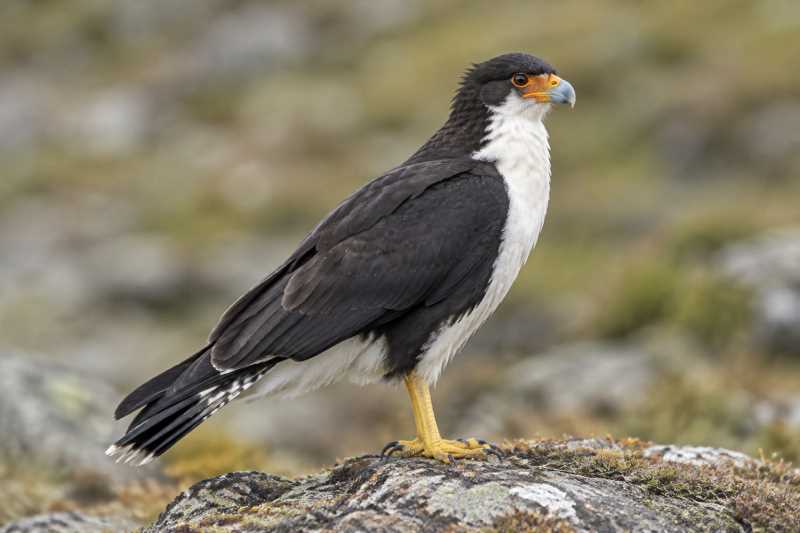
The White-throated Caracara (Phalcoboenus albogularis) stands as a remarkable avian species, captivating ornithologists and bird enthusiasts alike with its striking features and enigmatic behavior. This bird of prey, belonging to the family Falconidae, is found predominantly in the southern regions of South America, particularly in Argentina and Chile. Despite its relative obscurity in the wider birding community, the White-throated Caracara plays a vital role in its ecosystem, serving as both a predator and scavenger.
Taxonomy and Description
The White-throated Caracara is a member of the genus Phalcoboenus, which comprises four species of caracaras that inhabit South America. This genus is part of the broader Falconidae family, which includes falcons and caracaras. The species name ‘albogularis’ is derived from Latin, meaning ‘white-throated’, aptly describing one of its most distinguishing features.
This medium-sized bird of prey typically measures between 45 to 50 centimeters in length, with a wingspan reaching up to 120 centimeters. It weighs around 700 to 900 grams. The adult White-throated Caracara is characterized by its predominantly dark plumage contrasted by a stark white throat, which extends to the side of its neck. Its facial skin is bare and exhibits a yellow-orange hue, a feature common among caracaras. The legs are also yellow, and the beak is robust and hooked, adapted for tearing flesh.
Habitat and Distribution
The White-throated Caracara inhabits the rugged landscapes of Patagonia, ranging from the southern Andes to the Tierra del Fuego. It is typically found in open areas, including grasslands, shrublands, and the transitional zones between forests and open land. This preference for open habitats allows it to effectively hunt and scavenge for food.
The distribution of the White-throated Caracara is largely limited to Argentina and Chile, with occasional sightings reported in the Falkland Islands. Its population density is relatively low, and the bird is often solitary or found in small family groups.
Behavior and Diet
The White-throated Caracara exhibits a diverse range of behaviors that underscore its adaptability and intelligence. It is both a hunter and a scavenger, feeding on a wide array of prey, including small mammals, birds, and insects. The bird is also known to consume carrion, taking advantage of its keen sense of sight to locate carcasses from great distances.
In addition to its opportunistic feeding habits, the White-throated Caracara is noted for its bold and inquisitive nature. It often approaches human settlements in search of food, displaying little fear of people. This trait, combined with its adaptability, has allowed it to thrive in a variety of environments.
Breeding and Lifecycle
The breeding season for the White-throated Caracara typically occurs between September and December. During this time, the birds engage in elaborate courtship displays, which include aerial acrobatics and vocalizations. After mating, the female lays a clutch of two to three eggs in a nest constructed from twigs and lined with softer materials. These nests are often built on cliff ledges or in tall trees, providing a safe vantage point for the incubating parents.
Both parents participate in incubating the eggs and feeding the chicks after they hatch. The young caracaras fledge approximately six to eight weeks after hatching but remain dependent on their parents for several months as they learn to hunt and fend for themselves.
Conservation Status
The White-throated Caracara is currently classified as a species of Least Concern by the International Union for Conservation of Nature (IUCN). However, like many wildlife species, it faces threats from habitat destruction, climate change, and human activities. Conservation efforts are essential to ensure the continued survival of this remarkable bird.
Cultural Significance and Human Interaction
In the regions where it is found, the White-throated Caracara holds a place in local folklore and culture. It is often depicted as a symbol of strength and adaptability. Despite its bold nature, the caracara is generally tolerated by humans, and there are few reports of conflicts arising from its presence.
Conclusion
The White-throated Caracara is an extraordinary bird that embodies the resilience and adaptability of avian predators. Its striking appearance and diverse behaviors make it a fascinating subject for study and admiration. As we continue to explore the complexities of our natural world, the White-throated Caracara serves as a reminder of the intricate and delicate balance of ecosystems, urging us to protect and preserve the habitats that sustain such incredible biodiversity.
Through concerted conservation efforts and continued research, we can ensure that future generations will have the opportunity to marvel at the White-throated Caracara, both in its native habitat and as a symbol of the wild beauty of South America’s southern reaches.
Related posts