The Orange-backed Woodpecker: A Vibrant Gem of Southeast Asia
The Orange-backed Woodpecker, scientifically known as Chrysocolaptes validus, stands as one of the most striking avian residents of Southeast Asia’s lush forests. Its vivid plumage and distinctive behavior make it not only a fascinating subject for ornithologists but also a treasured sight for birdwatchers. This article delves into the captivating world of the Orange-backed Woodpecker, exploring its habitat, physical characteristics, behavior, and conservation status.
Habitat and Distribution
The Orange-backed Woodpecker is predominantly found in the tropical and subtropical forests of Southeast Asia, particularly in regions such as Sumatra, Java, and the Malay Peninsula. These birds thrive in lowland and montane rainforests, where they have access to a rich variety of insects and other arthropods. The dense forest canopies provide both food and shelter, making these environments ideal for their survival.
Forests in this region are characterized by high humidity and a dense understory, offering the Orange-backed Woodpecker ample opportunities to forage and nest. The presence of old trees with softwood is particularly important for their nesting habits, as these birds are cavity nesters.
Physical Characteristics
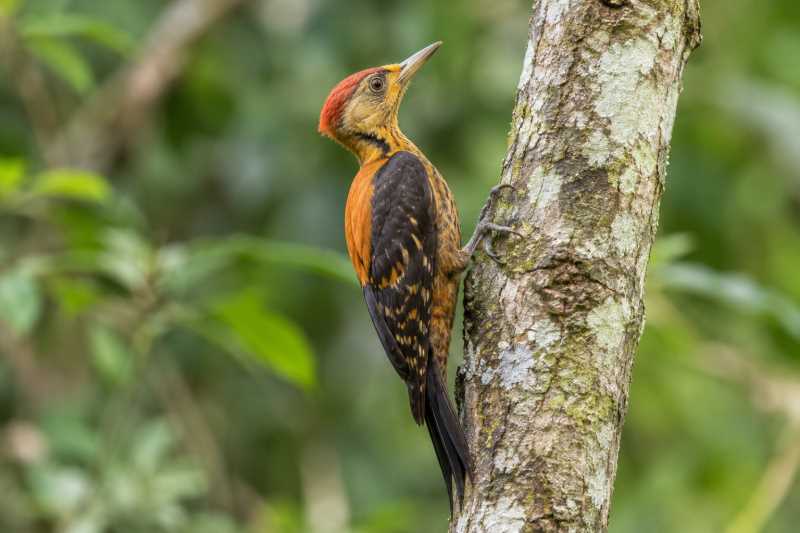
The Orange-backed Woodpecker is a medium-sized bird, measuring approximately 30-34 cm in length. Its most distinctive feature is its vibrant orange to reddish-orange back, which contrasts strikingly with its black and white barred wings and tail. The head is adorned with a bold red crown in males, while females sport a black crown, making sexual dimorphism evident.
The bird’s beak is long and chisel-like, perfectly adapted for drilling into wood in search of insects. Its zygodactyl feet, with two toes pointing forward and two backward, provide a strong grip on tree trunks, facilitating vertical climbing and stability while pecking.
Behavior and Diet
The Orange-backed Woodpecker is primarily an insectivore, with a diet consisting mainly of ants, beetles, larvae, and other small invertebrates. It forages by pecking at tree bark and probing into wood to extract its prey. This woodpecker’s strong neck muscles and resilient skull structure allow it to peck with significant force without injury.
These birds are known for their drumming behavior, which serves both as a communication method and a territorial display. The drumming can vary in speed and intensity, often used to attract mates or ward off rivals.
Typically seen alone or in pairs, Orange-backed Woodpeckers are territorial and may exhibit aggressive behavior towards intruders. During the breeding season, pairs engage in vocal duets, strengthening their pair bond and establishing their territory.
Reproduction
Breeding for the Orange-backed Woodpecker generally occurs during the dry season when food resources are more abundant. Nesting takes place in tree cavities, which the birds excavate themselves. Both male and female woodpeckers participate in the excavation and maintenance of the nest.
The female typically lays two to four eggs, which are incubated by both parents. The incubation period lasts about two weeks, followed by a fledging period of approximately three to four weeks. Both parents are actively involved in feeding and caring for the young until they are independent.
Conservation Status
The Orange-backed Woodpecker is currently classified as Near Threatened by the IUCN Red List. The primary threat to its survival is habitat loss due to deforestation and land conversion for agriculture and urban development. The degradation of Southeast Asia’s rainforests has resulted in the fragmentation of suitable habitats, posing a significant challenge to the species’ long-term survival.
Conservation efforts are crucial to safeguarding the future of the Orange-backed Woodpecker. Protecting large expanses of forest habitat and implementing sustainable forestry practices are essential strategies to ensure this species can thrive. Additionally, raising awareness about the importance of preserving biodiversity in these regions can help garner support for conservation initiatives.
Conclusion
The Orange-backed Woodpecker is an emblematic species of Southeast Asia’s biodiverse forests, symbolizing the intricate and vibrant ecosystems of the region. Its striking appearance and unique behaviors offer a glimpse into the rich tapestry of life found in these habitats. However, the challenges it faces underscore the urgent need for concerted conservation efforts. By protecting and restoring its natural habitats, we can help ensure that future generations will also have the opportunity to marvel at the beauty and resilience of the Orange-backed Woodpecker.
Related posts