The Majestic Magellanic Woodpecker: A Symbol of Patagonian Wilderness
The Magellanic Woodpecker (Campephilus magellanicus) stands as one of the largest woodpeckers in the world, captivating birdwatchers and ornithologists alike with its striking appearance and unique behaviors. Native to the southern regions of South America, particularly the temperate forests of Chile and Argentina, this bird is an emblem of the untouched wilderness of Patagonia.
Physical Characteristics
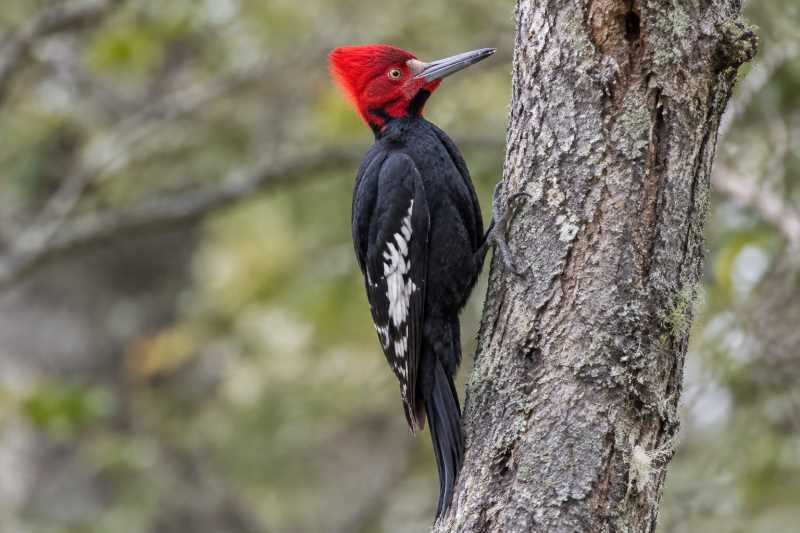
The Magellanic Woodpecker is an imposing figure in its natural habitat, with males reaching up to 45 centimeters in length. Their most distinguishing feature is the vibrant red plumage of the males, which contrasts sharply with their jet-black bodies. Females, while equally striking, display a more subdued coloration with a black crest. Both sexes share the characteristic long, chisel-like bill that is essential for their survival, allowing them to excavate wood to forage for insects.
Habitat and Distribution
The Magellanic Woodpecker is primarily found in the old-growth forests of Patagonia, where Nothofagus (Southern Beech) trees dominate the landscape. These forests, characterized by their dense canopy and the presence of large, decaying trees, provide the ideal environment for the woodpeckers. The availability of dead or dying trees is crucial, as these serve as sites for foraging and nesting.
These birds are highly territorial, often occupying large territories that they defend vigorously from intruders. This territoriality is a double-edged sword, as it requires vast expanses of uninterrupted forest to sustain viable populations. Consequently, habitat fragmentation poses a significant threat to their survival.
Behavior and Diet
Magellanic Woodpeckers are primarily insectivorous, feeding on a diet rich in wood-boring beetles and their larvae. They use their powerful beaks to strip bark and excavate holes in search of food. Their feeding habits are not only crucial for their survival but also play an essential role in the health of their ecosystem, as they help control insect populations and facilitate the decomposition process of wood.
These woodpeckers are also known for their unique drumming behavior, which serves as a means of communication. The sound of their drumming can carry over long distances, allowing them to convey messages to potential mates or rivals. During the breeding season, which occurs from late winter to early spring, males engage in elaborate displays to attract females, including drumming, calling, and showcasing their vibrant plumage.
Conservation Status
While the Magellanic Woodpecker is currently classified as a species of Least Concern by the International Union for Conservation of Nature (IUCN), its populations are under pressure from habitat loss and degradation. The expansion of agriculture, forestry, and human settlement into Patagonian forests has led to significant habitat fragmentation, which poses a threat to these birds’ ability to maintain their territories.
Efforts to conserve the Magellanic Woodpecker focus on protecting its natural habitat through the establishment of protected areas and the promotion of sustainable forestry practices. Initiatives aimed at raising awareness about the ecological importance of these birds are crucial for their long-term conservation.
Cultural Significance
The Magellanic Woodpecker holds a special place in the cultural heritage of the indigenous Mapuche people, who inhabit regions of Patagonia. Known as "carpintero" in Spanish, these birds are often seen as symbols of strength and resilience, reflecting the rugged beauty of their natural habitat.
In recent years, there has been a growing interest in eco-tourism in Patagonia, with many tourists drawn to the region’s rich biodiversity. The Magellanic Woodpecker is a key attraction, and its presence in these forests underscores the need for sustainable tourism practices that prioritize the conservation of these unique ecosystems.
Conclusion
The Magellanic Woodpecker is more than just a bird; it is a vital component of the Patagonian ecosystem and a symbol of the region’s natural beauty. Protecting this species requires concerted efforts to conserve its habitat and ensure that future generations can continue to marvel at its splendor. Through a combination of scientific research, conservation initiatives, and public awareness campaigns, we can hope to secure a future for the Magellanic Woodpecker and the wilderness it represents.
Related posts