The Elusive Grey-throated Rail: A Comprehensive Overview
The Grey-throated Rail, scientifically known as Canirallus oculeus, is a fascinating and elusive bird species that captivates ornithologists and bird enthusiasts alike. With its distinctive appearance and secretive behavior, this rail has secured its place as a subject of intrigue in the avian world. This article delves into the various aspects of the Grey-throated Rail, including its habitat, behavior, and conservation status, providing a comprehensive overview of this remarkable species.
Habitat and Distribution
The Grey-throated Rail inhabits the dense forests and wetlands of sub-Saharan Africa. It is predominantly found in the tropical regions stretching from West Africa to the Congo Basin. These birds are particularly elusive, preferring the cover of dense vegetation, which offers them protection from predators and human disturbance. Their habitat typically includes swamps, marshes, and forested waterways, where they can utilize the thick undergrowth for concealment.
Due to their secretive nature, Grey-throated Rails are seldom seen, and much of what is known about their distribution comes from sporadic sightings and anecdotal evidence. However, they are believed to be relatively widespread within their range, although their exact numbers are difficult to ascertain due to their reclusive habits.
Physical Characteristics
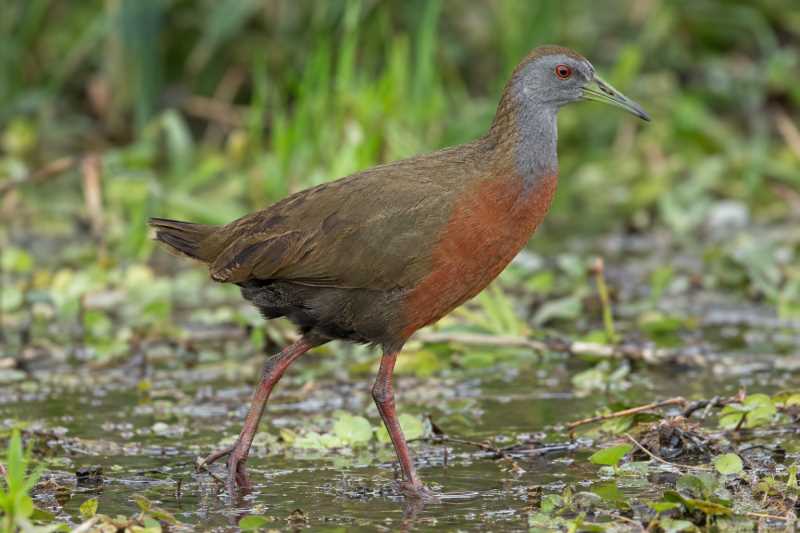
The Grey-throated Rail is a medium-sized bird, with a length ranging from 25 to 30 centimeters. Its plumage is predominantly dark brown, with a distinctive grey throat that gives the species its name. The rail’s underparts are typically streaked with lighter hues, providing effective camouflage against the forest floor and wetland environments.
One of the most striking features of the Grey-throated Rail is its bright red eyes, which stand out against its otherwise subdued coloration. This characteristic, along with its compact and rounded body, makes it a unique and distinguishable species within its habitat.
Behavior and Diet
As a member of the rail family, the Grey-throated Rail is known for its secretive and elusive behavior. These birds are most active during the early morning and late afternoon, often remaining hidden in dense vegetation during the heat of the day. Their elusive nature makes them difficult to observe in the wild, contributing to the mystery that surrounds them.
The diet of the Grey-throated Rail primarily consists of insects, small invertebrates, and aquatic organisms. They are opportunistic feeders, foraging on the forest floor and in shallow water for food. Their long toes allow them to walk on soft and uneven surfaces, such as mud and floating vegetation, which aids in their search for food.
Vocal communication is an essential aspect of their behavior, especially during the breeding season. The Grey-throated Rail produces a series of distinctive calls, which are believed to play a role in territory establishment and mate attraction. However, their vocalizations are often heard rather than seen, adding to the challenge of studying these birds in their natural habitat.
Reproduction and Lifespan
Information about the breeding habits of the Grey-throated Rail is limited, largely due to their secretive nature. It is believed that they build their nests in dense vegetation, close to water sources, where they can take advantage of the cover provided by the undergrowth.
The breeding season is thought to coincide with the rainy season, which provides an abundance of food resources for raising their young. Clutch sizes typically range from three to five eggs, with both parents involved in incubation and chick-rearing. The chicks are precocial, meaning they are relatively mature and mobile shortly after hatching, which is advantageous in their densely vegetated habitats.
The lifespan of the Grey-throated Rail in the wild is not well-documented, but like many other rail species, they are believed to live for several years, provided they can avoid predation and habitat destruction.
Conservation Status
The conservation status of the Grey-throated Rail is currently classified as "Least Concern" by the International Union for Conservation of Nature (IUCN). This classification indicates that the species is not currently at significant risk of extinction. However, ongoing threats such as habitat destruction, wetland drainage, and deforestation could potentially impact their populations in the future.
Conservation efforts aimed at preserving wetland and forest habitats are crucial for maintaining healthy populations of Grey-throated Rails. Protecting these environments not only benefits the rails but also supports the diverse array of species that share their habitat.
Conclusion
The Grey-throated Rail remains an enigmatic and captivating species, drawing the interest of bird enthusiasts and researchers alike. Despite the challenges in studying these elusive birds, ongoing research and conservation efforts are essential for ensuring their continued survival. As more information about their behavior and ecology comes to light, we can gain a deeper understanding of the vital role they play in their ecosystems and the importance of preserving their natural habitats.
Related posts