The Elegant Imperial Pigeon: A Majestic Avian Marvel
The world of ornithology is replete with fascinating species, each with its own unique charm and ecological importance. Among these, the Elegant Imperial Pigeon (Ducula concinna) stands out as a bird of remarkable grace and beauty. This article delves into the characteristics, habitat, behavior, and conservation status of this magnificent bird, elucidating why it captivates birdwatchers and scientists alike.
Physical Characteristics
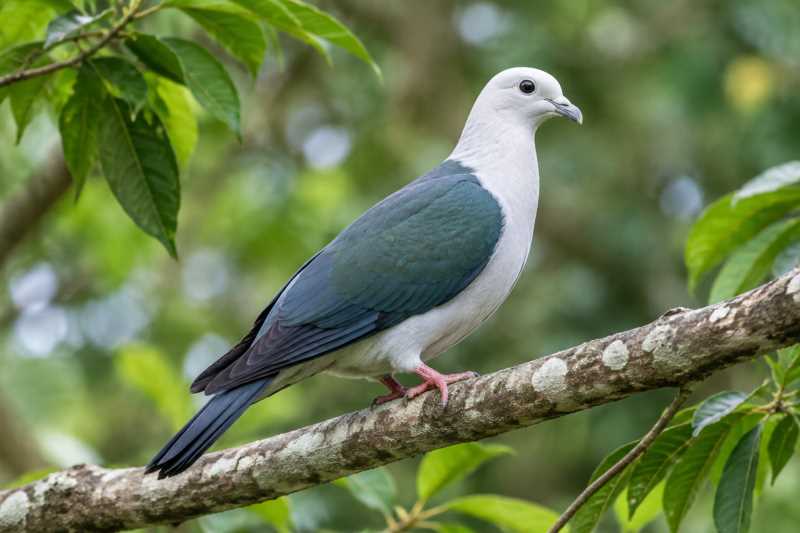
The Elegant Imperial Pigeon is aptly named, as it exhibits an air of sophistication in both appearance and demeanor. Measuring approximately 40 to 45 centimeters in length, this species is noted for its robust body and long tail. Its plumage is predominantly a soft gray, transitioning to a lighter hue on the head and neck. The wings and back are adorned with a metallic green sheen that shimmers in the sunlight, adding to its allure. The bird’s eyes are striking with a vivid red ring, contrasting against its pale face.
One of the distinguishing features of the Elegant Imperial Pigeon is its powerful, hooked bill, which is well-adapted for its frugivorous diet. The legs and feet are strong, designed for perching on branches as it forages in the forest canopy.
Habitat and Distribution
The Elegant Imperial Pigeon is primarily found in the tropical and subtropical forests of the Indonesian archipelago. Its range includes the islands of Sulawesi, the Moluccas, and the Lesser Sunda Islands. These regions are characterized by dense forests and abundant fruit-bearing trees, providing the ideal environment for the pigeon’s fruit-based diet.
Preferring the mid to upper canopy layers of the forest, the Elegant Imperial Pigeon plays a crucial role in seed dispersal, aiding in the propagation of numerous plant species. This contributes significantly to the health and sustainability of its habitat, showcasing the bird’s ecological importance.
Behavior and Diet
Ducula concinna is a social bird, often observed in small flocks. It is known for its distinctive cooing calls, which serve as communication among flock members and also play a role in courtship rituals. The call is a deep, resonant sound that can be heard echoing through the forest.
The pigeon’s diet consists largely of figs and other fruits, which it ingests whole. Its digestive system is specially adapted to handle large seeds, which are excreted and thus dispersed over wide areas. This mutualistic relationship between the pigeon and its food sources is vital for maintaining the ecological balance within its ecosystem.
The Elegant Imperial Pigeon is also known for its strong, purposeful flight. Despite its size, it maneuvers adeptly among the trees, thanks in part to its broad wings. This adeptness in flight is critical not only for foraging but also for evading predators.
Reproduction and Lifespan
Breeding for the Elegant Imperial Pigeon typically occurs during the wet season when food resources are abundant. The species is monogamous, with pairs forming strong bonds. Courtship involves a series of displays, including bowing and cooing, to attract a mate.
Nesting usually takes place high in the forest canopy, where the female lays a single white egg. Both parents share the responsibility of incubating the egg and, subsequently, feeding the chick. The young pigeon grows rapidly, fledging within several weeks and gaining independence shortly thereafter.
Conservation Status
Currently, the Elegant Imperial Pigeon is classified as Least Concern by the International Union for Conservation of Nature (IUCN). However, its populations are facing threats from habitat destruction and fragmentation due to logging and agricultural expansion. These activities reduce the availability of suitable nesting sites and food resources, posing a risk to the species’ long-term survival.
Conservation efforts are crucial to ensure the continued existence of this species. Protecting its natural habitat through sustainable land management practices and establishing conservation areas are essential steps. Additionally, raising awareness about the ecological role of the Elegant Imperial Pigeon can foster community support for conservation initiatives.
Conclusion
The Elegant Imperial Pigeon is a testament to the intricate beauty and complexity of avian life. Its striking appearance, coupled with its ecological significance as a seed disperser, highlights the interconnectedness of species within tropical ecosystems. Ensuring the survival of Ducula concinna requires concerted conservation efforts and a deeper appreciation for the natural world.
As we continue to explore the wonders of biodiversity, the Elegant Imperial Pigeon serves as a reminder of the delicate balance that sustains life on Earth. By safeguarding such species, we not only preserve their beauty but also the health of our planet’s ecosystems.
Related posts