The Great Spinetail: A Jewel of Avian Evolution
The world of ornithology is as diverse and fascinating as the birds it studies. Among the myriad species that captivate birdwatchers and researchers alike is the Great Spinetail (Synallaxis hypochondriaca). This small passerine bird, native to the Andes of Peru, is a remarkable example of avian adaptation and specialization. In this article, we delve into the characteristics, habitat, and conservation status of this unique species, shedding light on why it is considered a jewel of avian evolution.
Taxonomy and Physical Description
The Great Spinetail belongs to the Furnariidae family, a diverse group of birds known for their complex nests and adaptive behaviors. The genus Synallaxis comprises many birds commonly referred to as spinetails. These birds are characterized by their long, graduated tails and distinctive vocalizations.
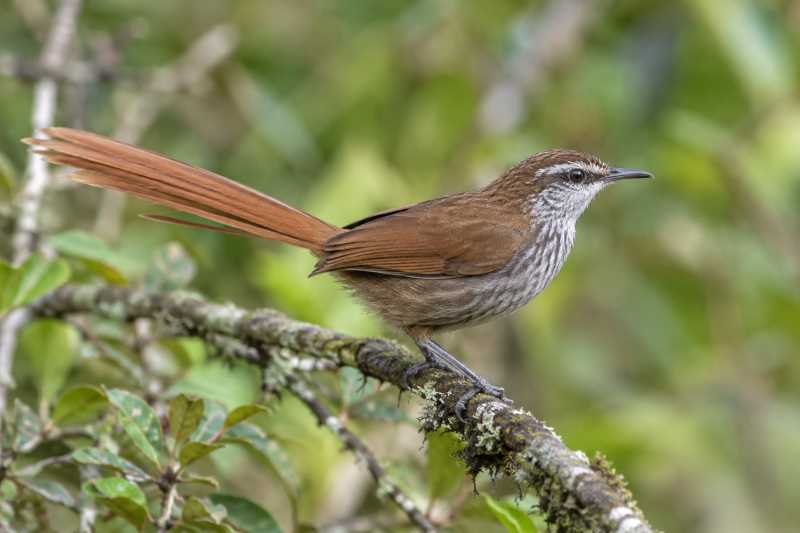
The Great Spinetail is about 18 centimeters in length, with an average weight of 20 grams. It possesses a striking plumage that sets it apart from its relatives. Its upperparts are a rich chestnut-brown, transitioning to a paler, buffy underbelly. The bird’s most distinguishing feature is its tail, which is not only long but also displays a unique pattern of rufous and brown feathers. These physical attributes not only aid in its identification but also play a role in its behavior and ecology.
Habitat and Distribution
The Great Spinetail is endemic to the eastern slopes of the Andes in Peru. It primarily inhabits humid montane forests, often at elevations ranging from 2,000 to 3,500 meters above sea level. This bird is particularly associated with Chusquea bamboo, which dominates its preferred habitat.
The specialization of the Great Spinetail to this specific habitat type underscores its dependence on the ecological health of montane forests. These areas are characterized by high rainfall, dense vegetation, and a rich diversity of flora and fauna. The bird’s reliance on bamboo is a critical aspect of its life history, as these plants provide essential resources for feeding and nesting.
Behavior and Diet
The Great Spinetail exhibits fascinating behavioral adaptations suited to its montane environment. It is primarily insectivorous, feeding on a variety of arthropods that it gleans from leaves and branches. This feeding behavior is facilitated by its strong, curved beak and agile movements, allowing it to navigate the dense undergrowth with ease.
Socially, the Great Spinetail is often observed in pairs or small family groups. Its vocalizations are a vital part of its communication, consisting of a series of trills and whistles that echo through the forest. These calls serve multiple purposes, from territory defense to mate attraction.
Breeding and Nesting
Breeding in the Great Spinetail is a complex affair, involving intricate nest construction. Like many members of the Furnariidae family, it builds elaborate nests using a combination of twigs, leaves, and fibers. These nests are typically constructed in dense foliage, providing concealment from predators and protection from the elements.
The breeding season generally coincides with periods of abundant food availability, ensuring that chicks have a higher chance of survival. Both parents are involved in rearing the young, sharing duties such as incubation and feeding.
Conservation Status and Threats
The Great Spinetail is currently classified as Near Threatened by the International Union for Conservation of Nature (IUCN). The primary threat facing this species is habitat loss due to deforestation and agricultural expansion. The conversion of montane forests into farmland and the harvesting of bamboo are significant concerns for the continued survival of this species.
Conservation efforts are underway to protect the natural habitats of the Great Spinetail. These include the establishment of protected areas and community-based conservation programs aimed at sustainable land use. Additionally, research into the ecology and behavior of the species is crucial for informing conservation strategies and ensuring the long-term preservation of this remarkable bird.
Conclusion
The Great Spinetail is a testament to the rich biodiversity of the Andean montane forests. Its unique adaptations and specialized habitat requirements highlight the intricate connections between species and their environments. As conservationists and researchers work to protect this species, the Great Spinetail serves as a symbol of the broader efforts needed to preserve the delicate ecosystems of our planet.
Understanding and appreciating birds like the Great Spinetail can inspire a deeper commitment to conservation and a recognition of the vital role that each species plays in maintaining ecological balance. In celebrating the beauty and complexity of such creatures, we acknowledge the importance of safeguarding our natural heritage for future generations.
Related posts