Little Cuckoo-Dove (Macropygia ruficeps): A Detailed Exploration
The Little Cuckoo-Dove (Macropygia ruficeps) is a captivating bird species that belongs to the Columbidae family, which encompasses pigeons and doves. Known for its distinctive rufous color and graceful demeanor, this bird is a fascinating subject for both ornithologists and bird enthusiasts alike. In this article, we delve into the various aspects of the Little Cuckoo-Dove, exploring its habitat, behavior, and conservation status.
Habitat and Distribution
The Little Cuckoo-Dove is predominantly found in various parts of Asia, with a significant presence in countries such as Indonesia, Malaysia, Thailand, and the Philippines. It thrives in subtropical or tropical moist lowland forests and montane forests. These habitats provide the essential elements for its survival, including abundant food sources and suitable nesting sites.
The adaptability of the Little Cuckoo-Dove to different forest environments is one of its most remarkable features. This adaptability ensures its presence across a wide range of altitudes, from lowland areas to mountainous regions. However, despite its adaptability, the species prefers dense forested areas where it can easily find shelter and food.
Physical Characteristics
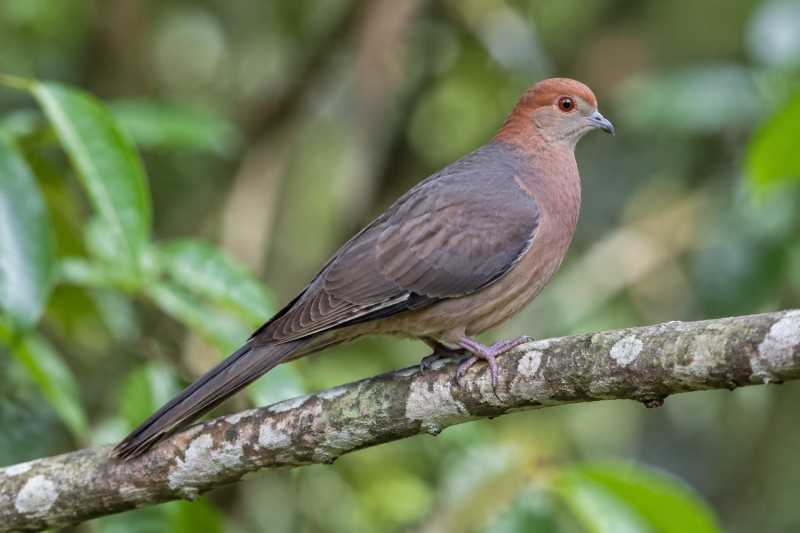
The Little Cuckoo-Dove is a relatively small bird, measuring about 27-31 centimeters in length. Its most striking feature is its rufous-colored plumage, which gives the bird a warm and inviting appearance. The feathers are primarily a rufous-brown color with a slight iridescence, particularly noticeable when the bird is in flight or under direct sunlight.
A key characteristic of the Little Cuckoo-Dove is its long tail, which is often used for balance and maneuverability among the trees. The tail feathers are darker in color, providing a beautiful contrast to the lighter body feathers. The bird’s eyes are a deep brown, adding to its gentle and peaceful expression. Its beak is relatively short and slightly curved, perfectly adapted for foraging on the forest floor.
Behavior and Diet
The behavior of the Little Cuckoo-Dove is as intriguing as its appearance. It is predominantly solitary or found in pairs, rarely forming large flocks. This solitary nature is primarily due to its feeding habits and the distribution of food sources in its habitat.
The diet of the Little Cuckoo-Dove mainly consists of seeds, fruits, and small insects. It forages on the ground, using its beak to sift through leaf litter and soil. The bird’s diet is crucial for seed dispersal in its habitat, making it an important ecological player in maintaining the health of forest ecosystems.
Breeding behaviors of the Little Cuckoo-Dove are characterized by monogamous pair bonds. The courtship display involves a series of graceful flights and vocalizations. Once paired, the birds work together to build a nest, usually in a tree or shrub, where the female lays one or two eggs. Both parents take turns incubating the eggs and feeding the hatchlings.
Vocalization
The Little Cuckoo-Dove is not particularly known for its vocal prowess, but its calls are distinctive and play a significant role in communication. The calls are usually soft and cooing, used to communicate with mates or to signal territorial presence. These vocalizations are often heard during the early morning or late afternoon, adding a serene soundtrack to the forest ambiance.
Conservation Status
As of the latest assessments, the Little Cuckoo-Dove is listed as a species of Least Concern by the International Union for Conservation of Nature (IUCN). This status reflects its wide distribution and stable population trends across its range. However, like many forest-dwelling species, it faces threats from habitat loss due to deforestation and land conversion for agriculture and urban development.
Conservation efforts for the Little Cuckoo-Dove focus on habitat preservation and the establishment of protected areas. These efforts are crucial to ensure the long-term survival of the species and the ecological roles it plays in its habitat.
Conclusion
The Little Cuckoo-Dove is a testament to the beauty and diversity of avian life in the forests of Asia. Its unique characteristics and ecological importance make it a valuable species for both scientific study and conservation efforts. By understanding and preserving its habitat, we contribute to the broader goal of maintaining biodiversity and ecological balance.
As we continue to explore and appreciate the natural world, the Little Cuckoo-Dove serves as a reminder of the intricate connections that exist within ecosystems and our responsibility to protect them.
Related posts