The Enigmatic Yellow-billed Jacamar: A Jewel of the Neotropics
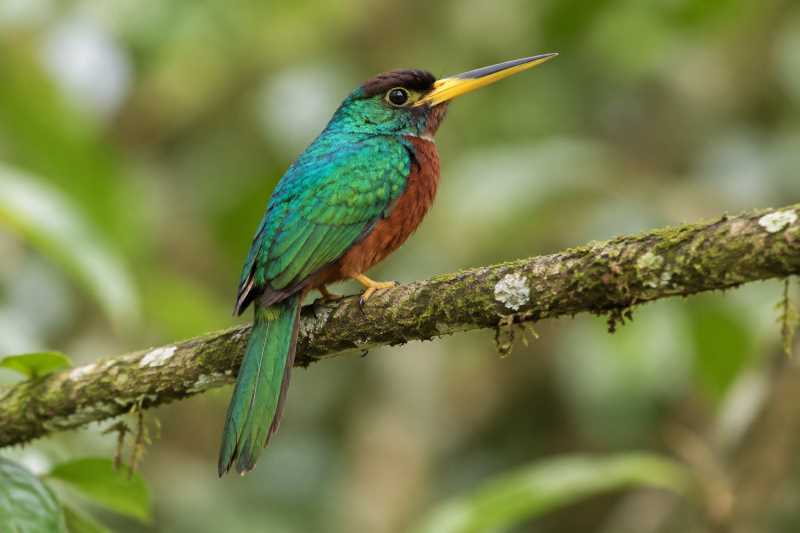
The Neotropical realm is home to a myriad of avian wonders, but few are as captivating as the Yellow-billed Jacamar (Galbula albirostris). This iridescent beauty, with its vibrant plumage and distinctive bill, inhabits the lush rainforests of South America. Despite its striking appearance, the Yellow-billed Jacamar remains relatively obscure, overshadowed by more flamboyant avian species. This article delves into the captivating world of the Yellow-billed Jacamar, exploring its habitat, behavior, and the conservation challenges it faces.
A Glimpse into the Habitat
The Yellow-billed Jacamar is predominantly found in the Amazon Basin, stretching across countries like Brazil, Peru, and Colombia. It thrives in the humid, lowland rainforests, often near water bodies. These birds prefer dense forest edges, where they can blend with the foliage while scouting for prey. Their preference for such specific habitats makes them excellent indicators of forest health and biodiversity.
Interestingly, the Yellow-billed Jacamar is also known to inhabit secondary forests and wooded areas, demonstrating a certain level of adaptability. This adaptability is crucial for their survival, especially in regions where deforestation and habitat fragmentation are rampant.
Distinctive Features and Behavior
Standing out with its metallic green upperparts and contrasting white underparts, the Yellow-billed Jacamar is a sight to behold. Its long, slender, and slightly curved bill is perfectly adapted for its insectivorous diet. The bird’s name is derived from its pale yellow bill, which is a distinctive feature among the jacamar family.
Yellow-billed Jacamars are known for their remarkable hunting technique. They perch silently, waiting for unsuspecting insects to fly by. Once prey is spotted, they swiftly dart out, capturing it mid-air with precision. This sit-and-wait strategy is energy-efficient and highly effective in their dense forest habitat.
These birds are generally solitary or found in pairs, displaying minimal social behavior. During the breeding season, however, they can become more vocal and territorial. Their calls, often described as high-pitched and melodious, resonate through the forest, marking their presence.
Breeding and Nesting
The breeding season for the Yellow-billed Jacamar typically aligns with the onset of the rainy season. This timing ensures an abundance of food for the fledglings. Unlike many birds which build nests in trees, jacamars dig burrows in sandy banks or termite mounds. This unique nesting strategy offers protection from predators and environmental elements.
Both parents share responsibilities, from excavating the nest to feeding the chicks. The female lays a clutch of two to four eggs, which are incubated for about three weeks. After hatching, the chicks are altricial, meaning they are born blind and featherless, requiring extensive parental care.
Conservation Status and Challenges
Currently, the Yellow-billed Jacamar is classified as a species of Least Concern by the IUCN. However, this does not imply immunity from threats. The primary challenge facing these birds is habitat loss due to deforestation, agriculture, and urbanization. As rainforests are cleared for human activities, the specialized habitats of the Yellow-billed Jacamar are shrinking.
Moreover, climate change poses an additional threat, potentially altering the delicate balance of their ecosystems. Changes in rainfall patterns and temperature could affect prey availability and breeding success, posing further risks to their populations.
Conservation efforts aimed at preserving rainforest habitats are crucial for the survival of the Yellow-billed Jacamar. Protecting large swathes of contiguous forest, promoting sustainable land-use practices, and raising awareness about the ecological role of jacamars are vital steps in ensuring their future.
The Cultural Significance
In addition to their ecological importance, Yellow-billed Jacamars hold cultural significance for indigenous communities across the Amazon. They are often featured in folklore and traditional stories, symbolizing beauty and resilience. Their presence is considered an indicator of a healthy environment, reflecting the interconnectedness of nature and culture.
Conclusion
The Yellow-billed Jacamar, with its dazzling plumage and unique ecological niche, embodies the vibrant biodiversity of the Neotropics. While they currently enjoy a stable population, the looming threats of habitat loss and climate change necessitate immediate conservation actions. By safeguarding their habitats and promoting sustainable practices, we can ensure that future generations continue to marvel at this avian jewel. As stewards of the planet, it is our responsibility to cherish and protect the natural wonders that grace our world, including the enchanting Yellow-billed Jacamar.
Related posts