The Enchanting Enigma of the Luzon Scops Owl (Otus longicornis)
The Luzon Scops Owl (Otus longicornis) is a captivating avian species that inhabits the lush rainforests of Luzon, the largest island in the Philippines. This elusive bird, belonging to the Strigidae family, is a testament to the rich biodiversity of the region and offers intriguing insights into the ecological complexity of tropical environments.
Physical Characteristics
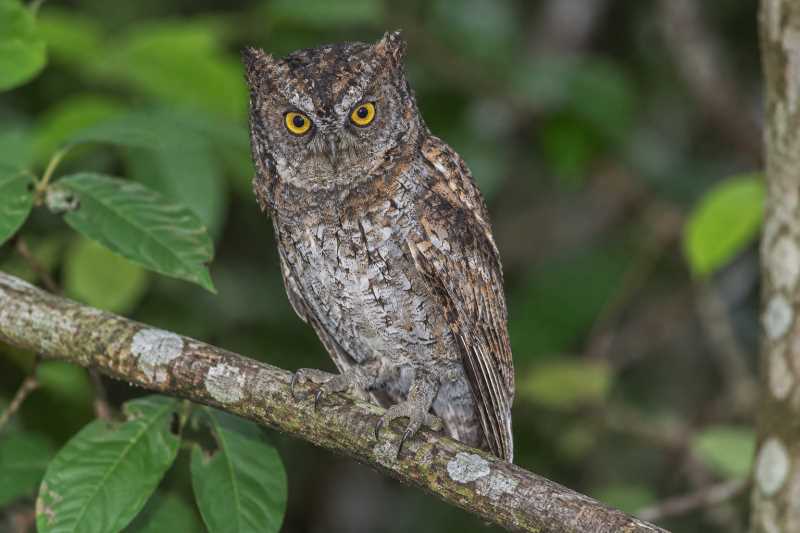
The Luzon Scops Owl is a small, cryptically colored bird, perfectly adapted to blend into its forest surroundings. It typically measures about 20-25 cm in length, with a wingspan of 55-60 cm. The plumage is predominantly brown with intricate patterns that mimic the texture of tree bark, providing excellent camouflage against predators and facilitating its nocturnal lifestyle. The owl’s strikingly yellow eyes and distinct ear tufts add to its enigmatic appearance, allowing it to communicate with other owls and perhaps even intimidate potential threats.
Habitat and Distribution
Endemic to the island of Luzon, the Luzon Scops Owl is primarily found in montane and lowland forests, particularly favoring areas with dense canopy cover and abundant foliage. The species thrives in altitudinal ranges from 300 to 2,500 meters above sea level. Its preference for high-altitude habitats, however, is increasingly threatened by deforestation and habitat degradation, posing significant challenges to its long-term survival.
The owl’s distribution is limited to several isolated forest fragments across Luzon, including the Sierra Madre mountain range, the Cordillera Central, and the Zambales Mountain Range. These regions are critical biodiversity hotspots, supporting a plethora of unique flora and fauna, emphasizing the importance of conservation efforts in these areas.
Behavior and Diet
As a nocturnal predator, the Luzon Scops Owl is most active during the night, relying on its acute hearing and exceptional vision to hunt. Its diet primarily consists of insects, small mammals, and occasionally other birds. The owl plays a crucial role in maintaining ecological balance by controlling the population of its prey species, thereby contributing to the health of its ecosystem.
The owl’s hunting strategy involves perching silently on branches, scanning its surroundings for potential prey. Once a target is identified, the owl swoops down with remarkable precision and agility, using its sharp talons to capture its meal. This efficient hunting technique underscores the owl’s adaptability and survival skills.
Reproduction and Lifespan
Breeding in Luzon Scops Owls typically occurs during the dry season when food resources are more abundant. The species is monogamous, with pairs often forming long-lasting bonds. Nesting usually takes place in tree cavities, where the female lays a clutch of two to three eggs. Both parents are involved in incubating the eggs and feeding the chicks, demonstrating a strong sense of parental responsibility.
The Luzon Scops Owl’s lifespan in the wild is not well-documented, but it is believed to be similar to other small owl species, ranging from 10 to 15 years. The species’ longevity is influenced by various factors, including habitat quality, food availability, and predation pressures.
Conservation Status and Challenges
The Luzon Scops Owl is currently classified as Near Threatened by the International Union for Conservation of Nature (IUCN), primarily due to habitat loss and fragmentation. Deforestation, driven by agricultural expansion, logging, and infrastructure development, poses significant threats to the owl’s habitat, leading to population declines.
Conservation efforts are crucial to preserving the Luzon Scops Owl and its habitat. Initiatives such as establishing protected areas, promoting sustainable land-use practices, and engaging local communities in conservation activities are vital for ensuring the species’ survival. Additionally, further research is needed to better understand the owl’s ecology and behavior, providing valuable data to inform conservation strategies.
Conclusion
The Luzon Scops Owl is a remarkable species that embodies the unique biodiversity of the Philippines. Its presence in the forested landscapes of Luzon highlights the ecological richness of the region and underscores the importance of conservation efforts to protect this enigmatic bird and its habitat. By addressing the challenges facing the Luzon Scops Owl, we can contribute to preserving not only this species but also the intricate web of life that supports countless other organisms in these lush ecosystems.
In conclusion, the Luzon Scops Owl is not merely a symbol of natural beauty but also a key player in the ecological tapestry of Luzon. Understanding and protecting this species is essential for maintaining the health and balance of the island’s ecosystems, ensuring that future generations can continue to marvel at the wonders of the natural world.
Related posts