The Red-fronted Barbet (Tricholaema diademata): A Jewel of the African Woodlands
The rich biodiversity of the African continent is home to some of the world’s most fascinating avian species. Among these, the Red-fronted Barbet (Tricholaema diademata) stands out as a particularly captivating bird, not only for its vibrant plumage but also for its unique behavioral traits and ecological significance. This article provides an in-depth exploration of the Red-fronted Barbet, detailing its habitat, physical characteristics, behavior, and the role it plays in its ecosystem.
Habitat and Distribution
The Red-fronted Barbet is predominantly found in the eastern regions of Africa, with its range extending from southern Sudan and Ethiopia through Kenya and Tanzania, and into parts of Uganda. These birds inhabit a variety of environments, including woodland savannas, dry forests, and scrublands. They are particularly fond of areas that offer a mixture of tall trees and open spaces, which cater to their nesting and foraging needs.
These barbets are non-migratory, relying on their territorial instincts to establish and maintain home ranges. The availability of fruiting trees and sufficient cover significantly influences their choice of habitat. As a species adapted to life in relatively arid regions, the Red-fronted Barbet demonstrates remarkable resilience to environmental changes, although habitat destruction remains a concern.
Physical Characteristics
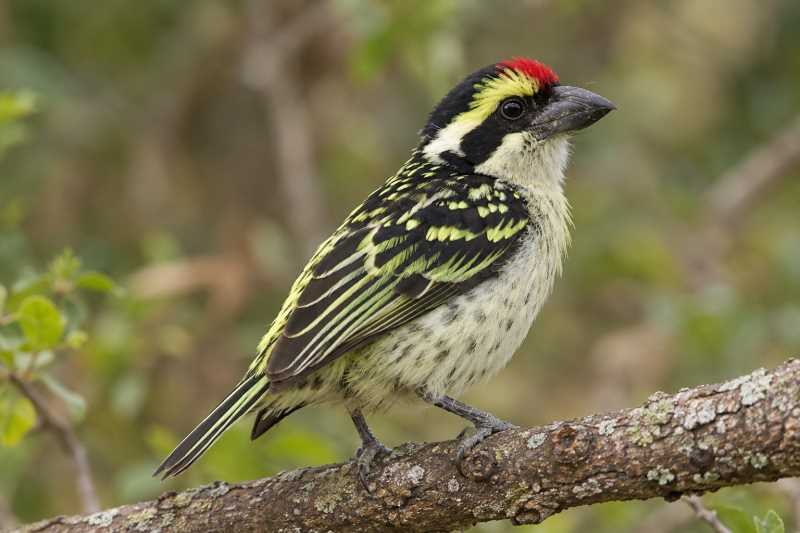
The Red-fronted Barbet is a small to medium-sized bird, measuring approximately 18 to 20 centimeters in length and weighing between 45 to 50 grams. Its most striking feature is the vibrant red forecrown, which contrasts beautifully with the black and white streaked pattern on its head and neck. The upperparts are primarily olive-brown, while the underparts are a lighter buff color, often adorned with subtle streaks.
This species exhibits sexual monomorphism, meaning males and females appear similar in plumage. However, subtle differences might be observed upon closer inspection, with males sometimes displaying slightly more vivid colors. The sturdy, chisel-like bill is perfectly adapted for drilling into tree bark, a behavior that is central to the barbet’s feeding and nesting habits.
Behavior and Diet
Red-fronted Barbets are diurnal birds, most active during the early morning and late afternoon. They are known for their distinctive calls, often described as a series of rapid, metallic ‘tink’ sounds that can be heard echoing through the woodlands. These calls serve various purposes, including mate attraction, territory defense, and communication between pair members.
Their diet predominantly consists of fruits and berries, with figs being a particular favorite. However, they are also opportunistic feeders, occasionally consuming insects and small invertebrates, especially during the breeding season when protein demands are higher. The barbet’s feeding habits play a crucial role in seed dispersal, contributing to the health and regeneration of their habitat.
Breeding and Nesting
The breeding season of the Red-fronted Barbet typically coincides with the onset of the rainy season, which varies depending on their geographical location. These birds are monogamous, forming long-term pair bonds. Courtship involves mutual preening and the exchange of food items, strengthening the pair’s bond.
Nesting takes place in tree cavities, which the birds excavate themselves using their strong bills. Both male and female participate in the excavation process, which can take several days to complete. The female lays a clutch of 2 to 4 eggs, which are incubated by both parents for about two weeks. Once hatched, the chicks are altricial, requiring substantial parental care. Both parents are involved in feeding and tending to the young until they fledge, which occurs approximately 30 days after hatching.
Conservation and Threats
Currently, the Red-fronted Barbet is not considered a threatened species, classified as Least Concern by the International Union for Conservation of Nature (IUCN). However, like many wildlife species, they face challenges due to habitat loss and fragmentation, primarily driven by agricultural expansion and logging activities.
Conservation efforts aimed at preserving the natural habitats of the Red-fronted Barbet, as well as other woodland species, are crucial. Protecting large tracts of forest and promoting sustainable land use practices can help ensure the continued survival of this vibrant bird.
Conclusion
The Red-fronted Barbet is a striking and ecologically significant species that embodies the beauty and complexity of African avifauna. Understanding its habits and ecological role not only enriches our appreciation of this bird but also underscores the importance of conservation efforts to protect such species and their habitats. As we continue to explore and learn from the natural world, the Red-fronted Barbet serves as a reminder of the intricate interconnections within ecosystems and our responsibility to safeguard them for future generations.
References
- Fry, C. H., & Keith, S. (2000). The Birds of Africa. Academic Press.
- Sinclair, I., & Ryan, P. (2010). Birds of Africa South of the Sahara. Struik Nature.
- BirdLife International (2021). Species factsheet: Tricholaema diademata.
Author’s Note
This article aims to provide a comprehensive overview of the Red-fronted Barbet, drawing on both scientific literature and field observations. The beauty and ecological importance of this species cannot be overstated, and it is hoped that increased awareness will contribute to its conservation.
Related posts