The Flame-rumped Tanager: A Jewel of the Neotropical Forests
The Flame-rumped Tanager (Ramphocelus flammigerus) is a strikingly beautiful bird that graces the neotropical regions of South America. Known for its vibrant plumage, this species is a favorite among bird watchers and ornithologists alike. With its distinctive coloration and intriguing behaviors, the Flame-rumped Tanager provides a compelling subject for study and admiration.
Taxonomy and Distribution
The Flame-rumped Tanager belongs to the family Thraupidae, a diverse group of birds commonly referred to as tanagers. This species is primarily found in Colombia and Ecuador, with its range extending into Panama. The Flame-rumped Tanager inhabits a variety of habitats, including humid lowland forests, secondary growth forests, and even gardens and plantations, demonstrating its adaptability.
Physical Characteristics
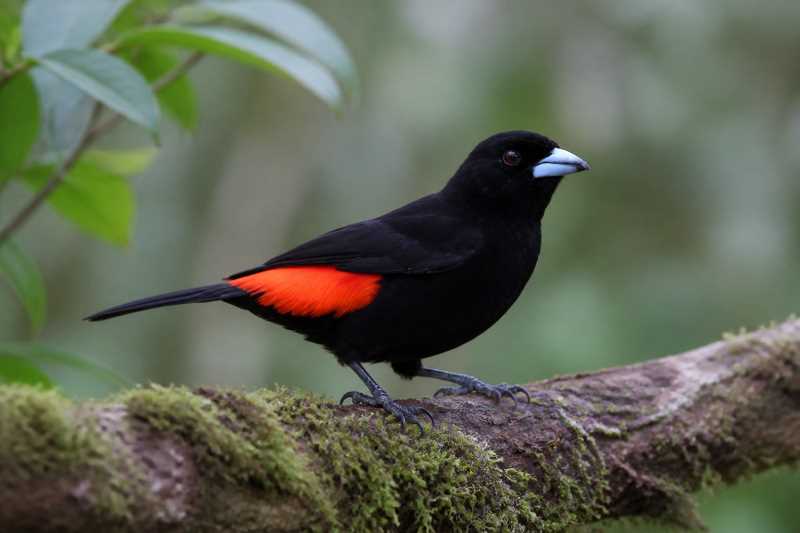
The Flame-rumped Tanager is named for its striking rump, which is a brilliant flame-orange or scarlet in color. The rest of the male’s plumage is predominantly black, creating a stark contrast that enhances the bird’s fiery rump. Females, on the other hand, have a more subdued coloration, with olive or grayish bodies and a duller orange rump. Both sexes share a robust, conical bill that is ideal for their varied diet.
Juveniles resemble the females but can be identified by their less intense coloration and more pronounced streaking on their underparts. As they mature, males gradually acquire the dramatic black and orange coloration that defines the species.
Behavior and Diet
Flame-rumped Tanagers are social birds often seen in small flocks or pairs. They are active and vocal, frequently communicating with a variety of calls and whistles. These birds are known for their acrobatic foraging behavior, often hanging upside down as they search for food among the foliage.
Their diet is omnivorous, consisting mainly of fruits, berries, and insects. They play a vital role in seed dispersal due to their fruit-eating habits. Insects provide essential protein, especially during the breeding season when nutritional demands are higher.
Reproduction and Lifespan
The breeding season for Flame-rumped Tanagers typically aligns with the rainy season when food is abundant. They build cup-shaped nests in trees or shrubs, carefully weaving together plant fibers and other materials. The female usually lays two to three eggs, which she incubates for about two weeks.
Both parents partake in feeding the chicks, bringing a steady supply of fruit and insects to the nest. The young fledge after approximately two weeks but remain dependent on their parents for some time after leaving the nest.
Conservation Status
Currently, the Flame-rumped Tanager is not considered threatened. It is classified as a species of Least Concern on the IUCN Red List. However, like many forest-dwelling species, it faces potential threats from habitat loss due to deforestation and agricultural expansion.
Conservation efforts in preserving tropical forests are crucial for maintaining healthy populations of Flame-rumped Tanagers. Initiatives that promote sustainable land use and protect critical habitats are vital for ensuring the long-term survival of this and other species.
The Importance of Ecotourism
The Flame-rumped Tanager, with its striking appearance and vibrant behavior, is a significant draw for ecotourism in its native regions. Birdwatchers and nature enthusiasts travel from all over the world to catch a glimpse of this and other exotic species. This influx of tourism can provide economic incentives for local communities to preserve natural habitats and engage in sustainable practices.
Conclusion
The Flame-rumped Tanager is a vibrant ambassador of the neotropical forests, showcasing the incredible biodiversity of these ecosystems. Its striking appearance and lively behavior make it a favorite among bird enthusiasts and highlight the ecological richness of its habitat. Protecting this species and its environment is essential for preserving the natural heritage of South America’s tropical regions.
Whether you’re a seasoned ornithologist or a budding birdwatcher, the Flame-rumped Tanager offers a glimpse into the beauty and complexity of avian life, inspiring a deeper appreciation for the world’s natural wonders.
Related posts