The Spectacled Petrel: A Remarkable Avian Marvel of the South Atlantic
The Spectacled Petrel, scientifically known as Procellaria conspicillata, stands as one of the most intriguing seabirds, captivating ornithologists and bird enthusiasts alike. With its distinctive appearance and unique behavior, this species represents a fascinating chapter in the story of avian life on our planet.
Origins and Habitat
Endemic to the remote and rugged South Atlantic island of Inaccessible, part of the Tristan da Cunha group, the Spectacled Petrel has a very limited geographic range. This isolation has contributed to its unique evolutionary path. Inaccessible Island, a UNESCO World Heritage Site, provides a sanctuary of sorts, free from introduced predators that have decimated bird populations elsewhere.
The island’s steep cliffs and lush vegetation create a perfect breeding ground for the Spectacled Petrel. Here, they nest in burrows or crevices, shielded from the harsh weather conditions of the Southern Ocean. While their breeding grounds are limited to this single location, the Spectacled Petrel ventures far and wide over the ocean, traveling thousands of kilometers in search of food.
Physical Characteristics
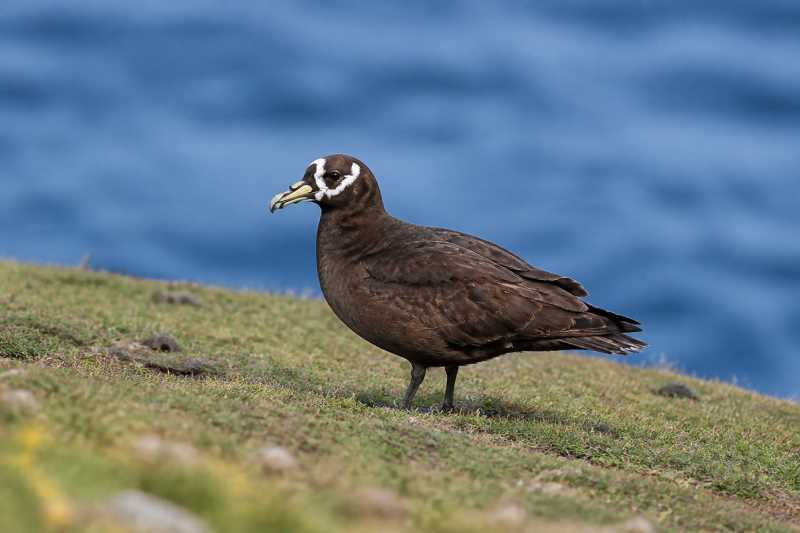
The Spectacled Petrel is easily recognizable by its striking facial markings, which resemble spectacles—a feature that gives the bird its common name. These markings, consisting of a white ring around each eye, stand out against the overall dark plumage of the bird, making it a distinctive sight amid the waves.
Adults typically measure about 55 cm in length, with a wingspan of approximately 135 cm. This robust build is well-suited to their life spent predominantly at sea. Their strong, hooked bills are adapted for their diet, which primarily consists of squid and fish, supplemented by crustaceans and other marine organisms.
Behavior and Ecology
The life of a Spectacled Petrel is one of endurance and adaptability. These birds are highly pelagic, spending most of their lives on the open ocean. They are masters of flight, using dynamic soaring techniques to travel long distances with minimal energy expenditure. This ability is vital for locating the scattered and often sparse food resources of the open sea.
During the breeding season, which runs from late September to April, Spectacled Petrels return to Inaccessible Island. Here, they engage in elaborate courtship displays, which include synchronized flying patterns and vocalizations. Once paired, the female lays a single egg, and both parents share the responsibility of incubation and feeding the chick.
Their diet at sea is diverse but primarily consists of squid and fish. They are known to follow fishing vessels, scavenging for offal and bait, which unfortunately makes them susceptible to accidental bycatch—a significant threat to their population.
Conservation Status
The Spectacled Petrel is currently classified as Vulnerable by the International Union for Conservation of Nature (IUCN). The primary threats to their population include bycatch in longline fisheries and potential habitat degradation on Inaccessible Island.
Efforts to conserve the Spectacled Petrel focus on mitigating bycatch through the adoption of bird-friendly fishing practices, such as weighted lines and bird-scaring devices. These measures aim to reduce the number of petrels accidentally caught during fishing operations. Additionally, the protection of their breeding habitat on Inaccessible Island is crucial.
Research and Monitoring
Ongoing research and monitoring are vital for understanding the ecology and population dynamics of the Spectacled Petrel. Satellite tracking and banding studies provide insights into their migratory patterns and feeding behaviors. These studies are essential for informing conservation strategies and ensuring the long-term survival of the species.
Collaborative efforts between conservation organizations, researchers, and local authorities have been instrumental in raising awareness and implementing protective measures. The Tristan da Cunha government, in particular, plays a crucial role in safeguarding the island’s natural heritage.
The Future of the Spectacled Petrel
The future of the Spectacled Petrel hinges on the continued commitment to conservation and the effective management of human activities that impact their survival. As a flagship species for the unique biodiversity of the South Atlantic islands, the Spectacled Petrel symbolizes the delicate balance of life in this remote part of the world.
By fostering international cooperation and encouraging sustainable fishing practices, we can help secure a future for the Spectacled Petrel and the myriad other species that share its habitat. As we strive to protect this remarkable seabird, we also preserve a vital part of our planet’s natural heritage, ensuring that the Spectacled Petrel continues to soar over the vast, open oceans for generations to come.
Related posts