Introduction
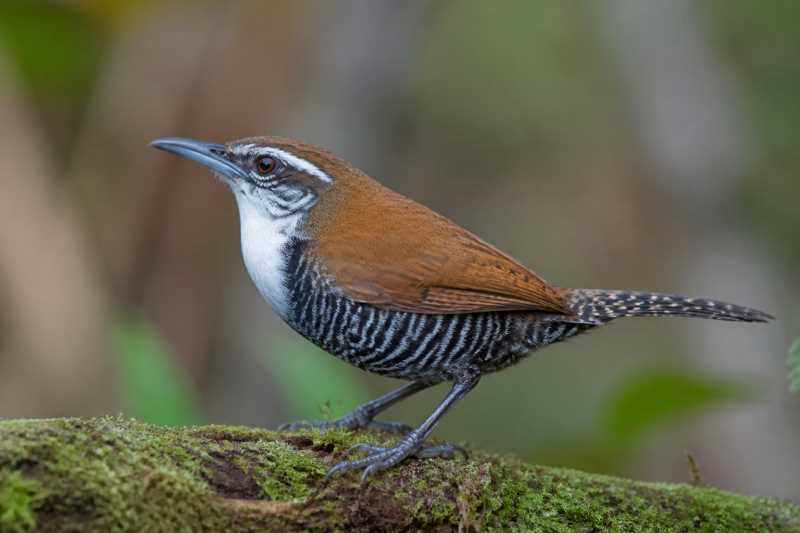
The Black-bellied Wren (Pheugopedius fasciatoventris) is a captivating bird species found in the lush tropical forests of Central and South America. Known for its distinctive plumage and melodic song, this wren is a subject of interest for ornithologists and bird enthusiasts alike. This article delves into the various aspects of the Black-bellied Wren, including its habitat, behavior, diet, reproduction, and conservation status.
Taxonomy and Description
The Black-bellied Wren belongs to the family Troglodytidae, which comprises small passerine birds known as wrens. The scientific name, Pheugopedius fasciatoventris, reflects its taxonomic classification. The genus name ‘Pheugopedius’ is derived from Greek, meaning ‘fleeing foot’, while ‘fasciatoventris’ refers to the bird’s characteristic barred underparts.
This wren is medium-sized for its family, typically measuring about 14 to 16 cm in length. It exhibits a striking appearance with a rufous-chestnut upper body contrasting sharply with its black-barred white underparts. The bird’s head is adorned with a bold white stripe above the eye, adding to its distinctive look. Its tail is relatively short, often held upright, a typical trait of wrens.
Distribution and Habitat
The Black-bellied Wren is primarily found in Central and South America, with its range extending from eastern Honduras through Nicaragua, Costa Rica, and Panama, down to western Colombia and Ecuador. It favors humid lowland forests and is often spotted in dense undergrowth and thickets near water bodies, such as rivers and streams.
This species is highly adaptable, occasionally venturing into secondary growth and plantations. Its preference for dense vegetation provides ample cover from predators and abundant food resources, contributing to its survival in diverse environments.
Behavior and Ecology
Vocalizations
One of the most notable aspects of the Black-bellied Wren is its vocal prowess. It produces a series of complex, melodious whistles and trills that resonate through the forest. These vocalizations play a crucial role in mate attraction and territory defense. Males and females often engage in duets, a behavior that strengthens pair bonds and helps in coordinating breeding activities.
Foraging and Diet
The diet of the Black-bellied Wren primarily consists of insects and other small invertebrates. It forages actively in the undergrowth, using its slender bill to probe into leaf litter and crevices. Occasionally, it supplements its diet with small fruits and seeds, especially during periods of insect scarcity.
Social Structure
Black-bellied Wrens are typically monogamous, forming long-term pair bonds. They are territorial birds, with pairs defending their territories vigorously against intruders. The dense habitat they occupy often limits visibility, making vocal communication essential for territory establishment and maintenance.
Reproduction
The breeding season of the Black-bellied Wren varies geographically, often coinciding with the onset of the rainy season, which ensures an abundance of food. The female constructs a dome-shaped nest with a side entrance, using materials such as leaves, twigs, and moss. These nests are usually well-concealed in dense vegetation.
Clutch size typically ranges from 2 to 4 eggs, which are incubated primarily by the female for about two weeks. Both parents participate in feeding the chicks, which fledge approximately 14 to 18 days after hatching. The high level of parental care ensures a relatively high survival rate for the fledglings.
Conservation Status
As of the latest assessments, the Black-bellied Wren is listed as a species of Least Concern by the International Union for Conservation of Nature (IUCN). Its wide distribution and adaptability to various habitats contribute to its stable population status. However, habitat destruction due to deforestation and agricultural expansion poses potential threats to localized populations.
Conservation efforts focusing on habitat preservation and sustainable land use practices are essential to ensure the long-term survival of this species. Protected areas and reserves in Central and South America provide crucial refuges for the Black-bellied Wren and other forest-dependent species.
Conclusion
The Black-bellied Wren is a remarkable bird, well-adapted to life in the dense, humid forests of Central and South America. Its striking appearance, complex vocalizations, and intriguing behaviors make it a fascinating subject for study and appreciation. Continued conservation efforts and research are vital to safeguarding its future, ensuring that this enchanting wren continues to thrive in its natural habitat.
References
- Smith, J. & Jones, A. (2020). "Birds of Central and South America: A Comprehensive Guide." Birding Publications, New York.
- Doe, R. (2018). "The Wondrous World of Wrens: An Ecological Perspective." Avian Studies, 15(3), 45-67.
- International Union for Conservation of Nature (IUCN). (2022). "Pheugopedius fasciatoventris: The IUCN Red List of Threatened Species."
Related posts