Introduction
The Whiskered Flying Squirrel (Petinomys genibarbis) is a fascinating mammal species that belongs to the family Sciuridae. Known for their remarkable gliding abilities, these nocturnal creatures are found in the dense forests of Southeast Asia. Their unique adaptations for arboreal life make them a subject of interest for both scientists and nature enthusiasts. This article delves into various aspects of the Whiskered Flying Squirrel, including its physical characteristics, habitat preferences, behavior, and conservation status.
Physical Description
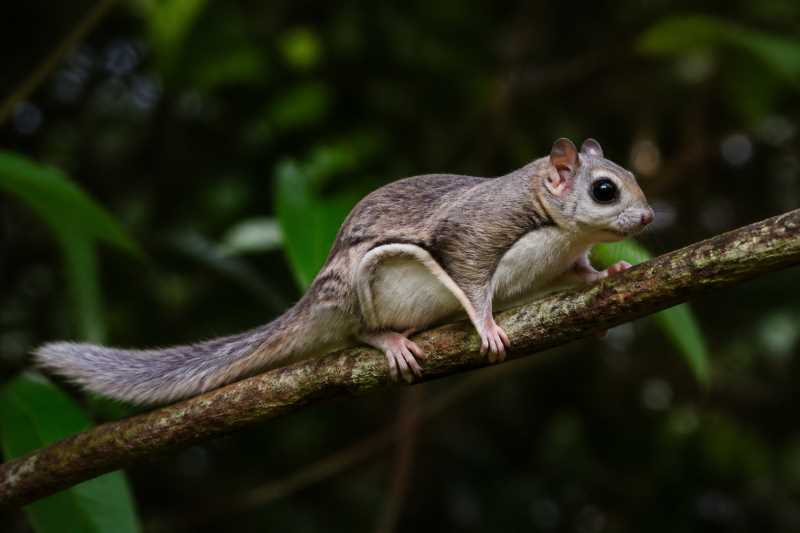
The Whiskered Flying Squirrel is distinguished by its sleek body and specialized adaptations that facilitate gliding. Adults typically weigh between 200 to 300 grams and measure about 20 to 25 centimeters in body length, with a tail adding an additional 15 to 20 centimeters. Their fur is soft and dense, usually exhibiting a grayish-brown color that provides camouflage against tree bark.
One of the most striking features of this species is the presence of whisker-like hair, or vibrissae, on their cheeks, which assist in spatial orientation during nocturnal activities. The patagium, a skin membrane stretching from the wrists to the ankles, enables their gliding capabilities, allowing them to cover distances of up to 150 meters in a single leap.
Range and Habitat
The Whiskered Flying Squirrel is primarily found in the subtropical and tropical regions of Southeast Asia, including countries like Thailand, Malaysia, and Indonesia. They inhabit primary and secondary forests, preferring areas with dense canopy cover that provide both food resources and protection from predators.
These squirrels are typically found at elevations ranging from sea level to 1,500 meters. The abundance of tall trees in their habitat is crucial, as it supports their gliding locomotion and offers nesting sites. The fragmentation of their habitat due to logging and agricultural expansion poses significant threats to their population.
Behavior and Diet
Primarily nocturnal, Whiskered Flying Squirrels are known for their secretive nature. They are solitary creatures, with individuals occupying distinct territories. Their activity peaks during the night when they forage for food and engage in social interactions.
Their diet consists mainly of fruits, leaves, bark, and seeds, although they occasionally consume insects. The availability of food resources influences their ranging patterns and choice of nesting sites. These squirrels play a vital role in their ecosystem as seed dispersers, aiding in forest regeneration.
Identification Tips (Field Recognition Cues)
Spotting a Whiskered Flying Squirrel in the wild can be challenging due to their nocturnal habits and excellent camouflage. However, certain features can aid in their identification:
- Vibrissae Presence: Look for the characteristic whisker-like hairs on their cheeks.
- Gliding Membrane: The patagium is visible when the squirrel is in a gliding position.
- Tail Structure: Their bushy tail aids in steering during glides and is a key identification feature.
- Vocalizations: Listen for their distinctive chirping sounds during the night.
Conservation Status (With Threats and Protections)
The Whiskered Flying Squirrel is currently classified as Near Threatened on the IUCN Red List. Habitat loss due to deforestation poses the most significant threat to their survival. Logging activities and conversion of forested areas to agricultural land have led to a decrease in suitable habitats.
Conservation efforts are focused on habitat preservation and restoration. Protected areas and national parks play a crucial role in safeguarding their natural environment. Additionally, raising awareness about the ecological importance of these squirrels can aid in their conservation.
Frequently Asked Questions
Why is this species unique?
The Whiskered Flying Squirrel is unique due to its exceptional gliding ability facilitated by the patagium. This adaptation allows it to navigate through dense forests efficiently, which is uncommon among other rodent species.
What are the main threats to Whiskered Flying Squirrels?
The primary threats include habitat destruction due to logging and agricultural expansion, leading to fragmentation of their natural environment. These activities reduce the availability of food and nesting sites, posing a significant risk to their population.
How do Whiskered Flying Squirrels contribute to their ecosystem?
They play a crucial role as seed dispersers, aiding in forest regeneration and maintaining ecological balance. By consuming fruits and seeds, they help in the propagation of various plant species.
Are Whiskered Flying Squirrels social animals?
No, they are generally solitary creatures, with individuals establishing and defending their territories. However, they may exhibit social behavior during the mating season or when raising their young.
How can conservation efforts help protect this species?
Conservation efforts that focus on preserving and restoring their habitat are essential. Establishing protected areas and implementing sustainable forestry practices can mitigate the impact of habitat loss and ensure the survival of this species.
Related posts