Introduction to the Crescent Honeyeater
The Crescent Honeyeater (Phylidonyris pyrrhopterus) is a remarkable bird species native to the diverse landscapes of southeastern Australia. Known for its distinctive crescent-shaped markings and melodic song, this bird is a fascinating subject for ornithologists and birdwatchers alike. The Crescent Honeyeater plays an essential role in its ecosystem, contributing to the pollination of native flora and serving as an indicator of environmental health.
Habitat and Distribution
Found predominantly in the temperate forests and heathlands of Victoria, Tasmania, and parts of New South Wales, the Crescent Honeyeater thrives in environments rich in nectar-producing plants. These habitats, ranging from coastal heathlands to montane forests, provide both the food and shelter necessary for the Honeyeater’s survival. Seasonal migrations are a characteristic feature of the Crescent Honeyeater’s behavior, with some populations moving to lower altitudes during the colder months.
Physical Characteristics
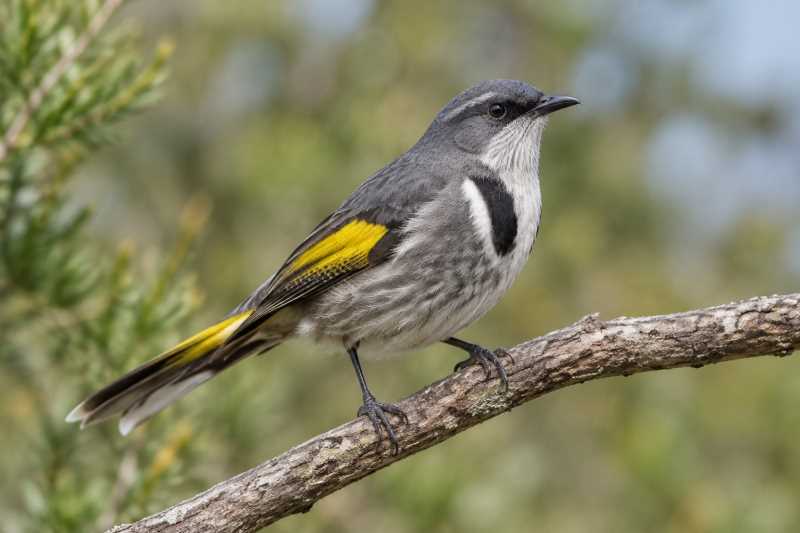
The Crescent Honeyeater is a medium-sized bird, measuring approximately 15-18 cm in length. Its plumage is predominantly olive-brown with a striking yellow patch on the wings and tail. The most distinguishing feature of this species is the bold white crescent marking across its chest, which contrasts sharply with its darker feathers. Males and females are similar in appearance, although females tend to be slightly duller in coloration.
Diet and Feeding Behavior
As its name suggests, the Crescent Honeyeater primarily feeds on nectar, playing a crucial role in the pollination of native plant species. It possesses a specialized brush-tipped tongue that allows it to efficiently extract nectar from flowers. In addition to nectar, the Honeyeater’s diet also includes insects and spiders, which provide essential proteins, especially during the breeding season. This opportunistic feeding behavior allows the Crescent Honeyeater to adapt to the availability of resources in its environment.
Breeding and Reproduction
The breeding season for the Crescent Honeyeater typically occurs from August to January. During this time, males engage in elaborate displays and songs to attract mates and defend their territories. Nests are constructed by the female and are typically located in dense shrubbery or trees, providing protection from predators. The nests are cup-shaped, made from grass, bark, and spider webs. The female lays a clutch of 2-3 eggs, which she incubates for approximately 14 days. Both parents are involved in feeding the chicks, which fledge about two weeks after hatching.
Conservation Status
Currently, the Crescent Honeyeater is listed as a species of Least Concern by the International Union for Conservation of Nature (IUCN). However, like many native species, it faces threats from habitat destruction, climate change, and competition from invasive species. Conservation efforts are focused on preserving its natural habitats and mitigating the impacts of urbanization and environmental change.
Importance in Ecosystem
The Crescent Honeyeater plays a pivotal role in its ecosystem, particularly in pollination. By feeding on the nectar of various flowering plants, it facilitates cross-pollination, contributing to the reproductive success of these plants. This not only supports the biodiversity of the region but also ensures the availability of food resources for other species. Additionally, as an insectivore, it helps control insect populations, maintaining ecological balance.
Observing the Crescent Honeyeater
Birdwatchers and nature enthusiasts can observe the Crescent Honeyeater in its natural habitat by visiting national parks and reserves within its distribution range. Key locations include the Grampians National Park in Victoria and the Tasmanian Wilderness World Heritage Area. Observing these birds requires patience and a keen ear, as their melodious calls often give away their presence before they are seen.
Conclusion
The Crescent Honeyeater is a captivating species that embodies the intricate relationships within its ecosystem. Its role as a pollinator and insectivore highlights the interconnectedness of nature, where each species, no matter how small, holds significance. Understanding and preserving the Crescent Honeyeater and its habitat is crucial for maintaining the ecological integrity of Australia’s southeastern landscapes. As we continue to study and appreciate this remarkable bird, it serves as a reminder of the richness and complexity of the natural world.
Related posts