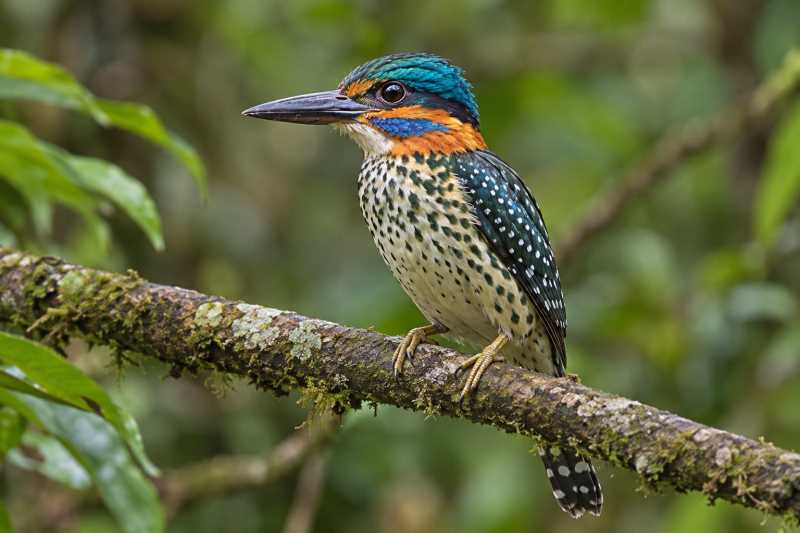
The Spotted Wood Kingfisher (Actenoides lindsayi) stands as a testament to the rich biodiversity of the Philippines, where it is exclusively found. This elusive bird is a member of the Alcedinidae family, known for their vibrant plumage and distinctive calls. While kingfishers are generally associated with water bodies, the Spotted Wood Kingfisher defies these expectations by inhabiting dense tropical forests, showcasing the incredible adaptability and diversity within this avian family.
Taxonomy and Description
Named after John Lindsay, a Scottish naturalist, the Spotted Wood Kingfisher is scientifically classified under the genus Actenoides. It is part of the Coraciiformes order, which also includes rollers and bee-eaters. This kingfisher is notable for its striking appearance; males boast a vivid green head, blue wings, and a rust-colored belly, while females have a more muted green plumage and lack the bright blue hues. Both sexes, however, share the distinctive spots that give the species its name, along with a robust, dagger-like bill that is characteristic of kingfishers.
Habitat and Distribution
This species is endemic to the Philippines, predominantly inhabiting lowland and lower montane forests on several islands, including Mindanao, Luzon, Negros, and Samar. The dense foliage of these tropical forests provides the perfect backdrop for their hunting techniques and nesting habits. Despite their vibrant feathers, Spotted Wood Kingfishers are notoriously difficult to spot, as they blend seamlessly into the dappled light of their forest environments.
Behavior and Diet
The Spotted Wood Kingfisher is an arboreal bird, spending most of its life in the treetops. Its diet is diverse, consisting primarily of insects, small reptiles, and occasionally small mammals. They are known to be sit-and-wait predators, perching silently in the foliage before swooping down to catch their prey with precision. This feeding strategy highlights the effectiveness of their keen eyesight and swift, agile flight.
Breeding behaviors of this species are equally fascinating. The kingfishers are cavity nesters, often using the abandoned burrows of other animals or natural crevices in trees to lay their eggs. Both parents share the responsibility of incubating the eggs and feeding the chicks, showcasing a strong pair bond that is crucial for the survival of their offspring.
Conservation Status
Currently, the Spotted Wood Kingfisher is classified as Least Concern by the International Union for Conservation of Nature (IUCN). However, this status does not mean it is free from threats. Habitat loss due to deforestation poses the most significant risk to its populations. The forests of the Philippines are being cleared at an alarming rate for agriculture, logging, and urban development, which threatens the natural habitat of many endemic species, including the Spotted Wood Kingfisher.
Conservation efforts are crucial to ensure the survival of this and other native species. Protected areas and national parks serve as vital refuges, but increased enforcement of environmental laws and community-based conservation initiatives are necessary to mitigate the ongoing threats to these birds’ habitats.
Cultural Significance
The Spotted Wood Kingfisher, along with other native Philippine wildlife, plays an important role in the cultural heritage of the region. Birds often feature in local folklore and are considered symbols of beauty and mystery. The presence of such unique species highlights the ecological richness of the Philippines and underscores the importance of preserving its natural heritage.
Conclusion
The Spotted Wood Kingfisher is a captivating species that highlights the Philippines’ rich biodiversity. Its vibrant plumage, intriguing behaviors, and the challenges it faces from habitat loss make it a symbol of conservation efforts in the region. Protecting such species not only preserves the ecological balance but also maintains the cultural and natural legacy of the islands. As awareness grows, it is hoped that increased conservation efforts will ensure that future generations will continue to marvel at the beauty and mystery of the Spotted Wood Kingfisher.
Related posts