Introduction
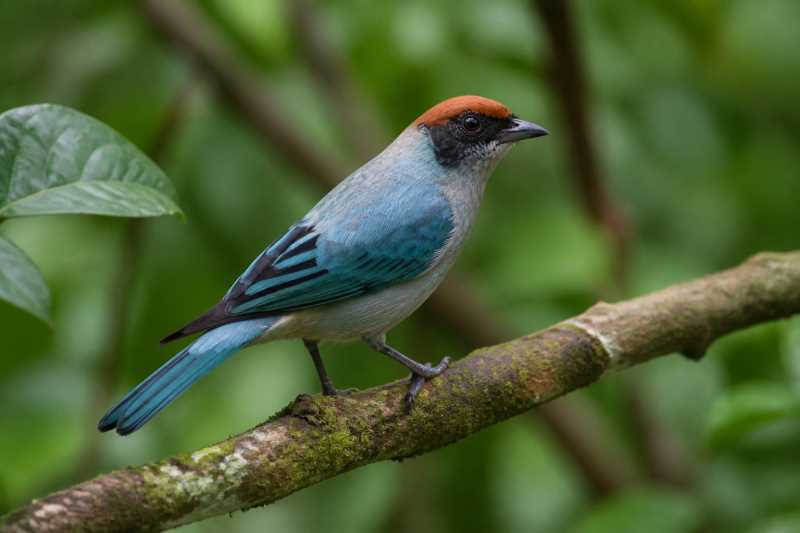
The Scrub Tanager, scientifically known as Stilpnia vitriolina, is a captivating bird species belonging to the family Thraupidae. Known for its vibrant colors and distinctive patterns, the Scrub Tanager is a species that enchants birdwatchers and ornithologists alike. Indigenous to a range of countries in South America, it thrives in diverse habitats, making it a fascinating subject of study for avian enthusiasts.
Taxonomy and Classification
The Scrub Tanager belongs to the genus Stilpnia, a group of tanagers known for their striking plumage. Previously classified under the genus Tangara, recent taxonomic revisions have placed them under Stilpnia, reflecting ongoing advancements in avian genetics and phylogeny. These revisions have allowed for a more accurate understanding of their evolutionary relationships with other tanagers.
Physical Description
One of the most striking features of the Scrub Tanager is its vibrant plumage. The bird exhibits a distinctive combination of colors, with its body primarily showcasing shades of blue and green. The head is often adorned with a striking mix of olive and turquoise hues. A notable feature is the contrasting throat and breast, which are usually a captivating shade of blue, creating a visual delight for observers. The bird’s compact size, typically measuring between 12 to 14 centimeters in length, along with its agile movements, makes it a fascinating subject to observe in the wild.
Habitat and Distribution
The Scrub Tanager is predominantly found in the Andean regions of Colombia, Ecuador, and parts of Venezuela. It thrives in subtropical or tropical moist montane forests, but it is also adaptable to degraded habitats, often found in scrublands and secondary growths. Its ability to thrive in varying altitudes, ranging from 800 to 2,500 meters, underscores its adaptability to diverse environmental conditions.
Behavior and Ecology
Feeding Habits
The Scrub Tanager primarily follows a frugivorous diet, feeding on a variety of fruits and berries. It plays a crucial role in seed dispersal, contributing to the ecological balance within its habitat. Occasionally, it supplements its diet with insects, especially during breeding seasons when the nutritional demand is higher.
Social Structure
These tanagers are known for their social behavior, often seen in small flocks. Their flocking behavior not only aids in foraging but also serves as a protective mechanism against predators. The Scrub Tanager is known to associate with mixed-species flocks, a behavior that enhances their foraging efficiency and provides additional protection from predators.
Reproduction and Lifespan
The breeding season for the Scrub Tanager typically coincides with the rainy season, when food resources are abundant. The species is known for its monogamous breeding pairs, with both parents actively involved in nest building and caring for the young. Nests are usually constructed in dense foliage, providing shelter and protection for the eggs and fledglings. The average clutch size ranges from two to three eggs, with an incubation period of approximately 14 days.
Conservation Status
According to the International Union for Conservation of Nature (IUCN), the Scrub Tanager is currently listed as a species of "Least Concern." Despite its relatively stable population, habitat loss due to deforestation and human encroachment poses a potential threat to its long-term survival. Conservation efforts aimed at preserving natural habitats and promoting sustainable land use are crucial to ensuring the continued existence of this vibrant species.
Cultural Significance
In regions where the Scrub Tanager is commonly found, it holds cultural significance and is often featured in local folklore and art. Its vivid plumage and melodious calls make it a popular subject in birdwatching tours, contributing to eco-tourism and local economies.
Conclusion
The Scrub Tanager, with its vibrant colors and ecological importance, serves as a reminder of the rich biodiversity found in the Andean regions of South America. Its adaptability and social behavior make it a remarkable species for both scientific study and casual observation. Continued efforts in conservation and habitat preservation are essential to ensure that this enchanting bird continues to thrive in its natural habitat.
As we deepen our understanding of species like the Scrub Tanager, we gain valuable insights into the complex ecosystems they inhabit and the intricate relationships that sustain them. Protecting such species is not only crucial for biodiversity but also for the natural heritage they represent.
Related posts