Introduction
The White-tailed Giant Rat, scientifically known as Uromys caudimaculatus, is a captivating species that intrigues both scientists and wildlife enthusiasts. Native to the rainforests of northeastern Australia and nearby islands, this distinctive rodent is an integral part of its ecosystem. This article delves into various aspects of the White-tailed Giant Rat, including its physical characteristics, habitat, behavior, diet, conservation status, and more.
Physical Description
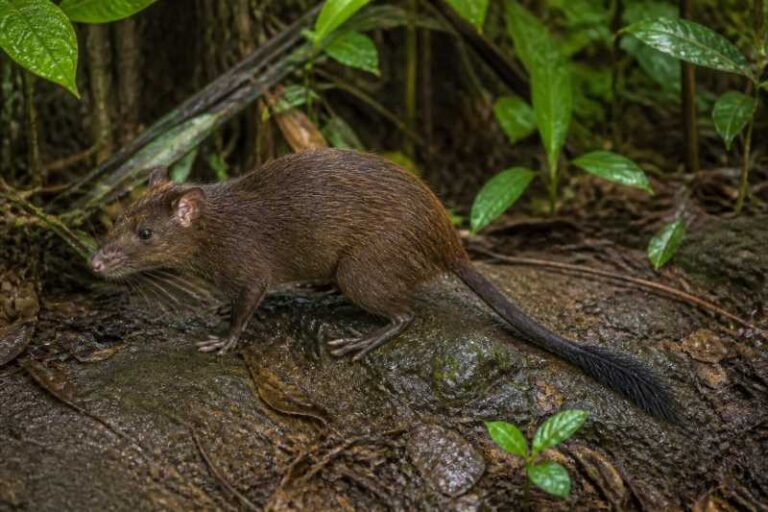
The White-tailed Giant Rat is a robust rodent, easily identifiable by its sizeable body and striking tail. Adult rats typically weigh between 500 grams to 1 kilogram, with a body length ranging from 25 to 35 centimeters, not including the tail. The tail itself is almost as long as the body, usually measuring 20 to 30 centimeters, and is characterized by a white tip, which gives the species its common name.
The rat’s fur is dense and coarse, predominantly dark brown or grey, providing excellent camouflage in its natural habitat. Its ears are rounded and prominent, aiding in acute hearing, essential for survival in the wild. The large, dark eyes are adapted for night vision, reflecting its primarily nocturnal lifestyle. The powerful hind limbs of the White-tailed Giant Rat are well-suited for climbing, a necessary adaptation for a life largely spent in trees.
Range and Habitat
The White-tailed Giant Rat is predominantly found in the tropical rainforests of northeastern Queensland, Australia, and on several islands within the Torres Strait. This species thrives in lowland and upland rainforests, where it prefers dense canopy coverage that provides both food and protection from predators.
Its habitat selection is closely linked to its arboreal nature, with individuals often observed in trees, where they build nests in hollows or dense foliage. The availability of food sources, such as fruits and seeds, heavily influences their distribution within these forested areas. The White-tailed Giant Rat is less frequently found in disturbed habitats, indicating a preference for pristine rainforest environments.
Behavior and Diet
The White-tailed Giant Rat is primarily nocturnal, spending the daylight hours resting in tree nests and becoming active at night to forage for food. This species is solitary, with individuals occupying specific territories that they mark with scent.
Its diet is omnivorous, with a strong preference for fruits, seeds, and nuts. The rat is known to play a significant role in seed dispersal, as it carries food items away from the parent plant and caches them for later consumption. Insects and small invertebrates also form part of its diet, supplementing its nutritional intake.
The White-tailed Giant Rat is an adept climber, using its strong limbs and prehensile tail to navigate the forest canopy. Its arboreal lifestyle helps it avoid many ground-dwelling predators, though it still faces threats from birds of prey and invasive species.
Identification Tips
Identifying the White-tailed Giant Rat in the wild can be challenging due to its nocturnal and elusive nature. However, there are several field recognition cues that can aid in its identification:
- Tail Tip: Look for the distinctive white tip on the tail, which is a prominent feature of this species.
- Size and Build: Note the large size and robust build compared to other rodent species in the region.
- Fur Color: The coarse, dark brown or grey fur helps distinguish it from other rodents.
- Behavior: Observing nocturnal activity and arboreal habits can provide clues to its identity.
- Vocalizations: Listening for specific calls or rustling sounds in the trees at night may indicate its presence.
Conservation Status
The conservation status of the White-tailed Giant Rat is currently listed as "Least Concern" by the International Union for Conservation of Nature (IUCN). However, this does not mean the species is free from threats. Habitat loss due to deforestation and agricultural expansion poses a significant risk, as it reduces the availability of suitable living spaces.
Invasive species, such as feral cats and foxes, also threaten the White-tailed Giant Rat by predating on individuals, particularly the young. Conservation efforts focus on habitat preservation and management to mitigate these threats and ensure the species’ continued survival.
Protection measures include establishing protected areas and reserves where the species’ habitat is safeguarded from development and logging activities. Public awareness and education campaigns are also crucial in promoting the importance of conserving rainforest ecosystems.
Frequently Asked Questions
What is the primary diet of the White-tailed Giant Rat?
The White-tailed Giant Rat primarily feeds on fruits, seeds, and nuts, playing a crucial role in seed dispersal within its rainforest habitat. It also consumes insects and small invertebrates to supplement its diet.
How does the White-tailed Giant Rat contribute to its ecosystem?
As an omnivorous seed disperser, the White-tailed Giant Rat helps maintain plant diversity and forest regeneration by spreading seeds away from parent plants, promoting healthy rainforest ecosystems.
What are the main threats to the White-tailed Giant Rat?
The main threats to the White-tailed Giant Rat include habitat loss due to deforestation and agricultural expansion, as well as predation by invasive species like feral cats and foxes.
How can I identify a White-tailed Giant Rat in the wild?
Identifying this species involves looking for its distinctive white tail tip, large size, and robust build, as well as observing nocturnal and arboreal behaviors. Listening for specific vocalizations at night can also aid in identification.
Is the White-tailed Giant Rat endangered?
Currently, the White-tailed Giant Rat is classified as "Least Concern," but ongoing habitat destruction and invasive species pose potential risks, highlighting the need for effective conservation measures.
Related posts